Majlis
Collectibles
Rare Shabraks from the mountains of Tusheti. One artisan, one piece at a time.
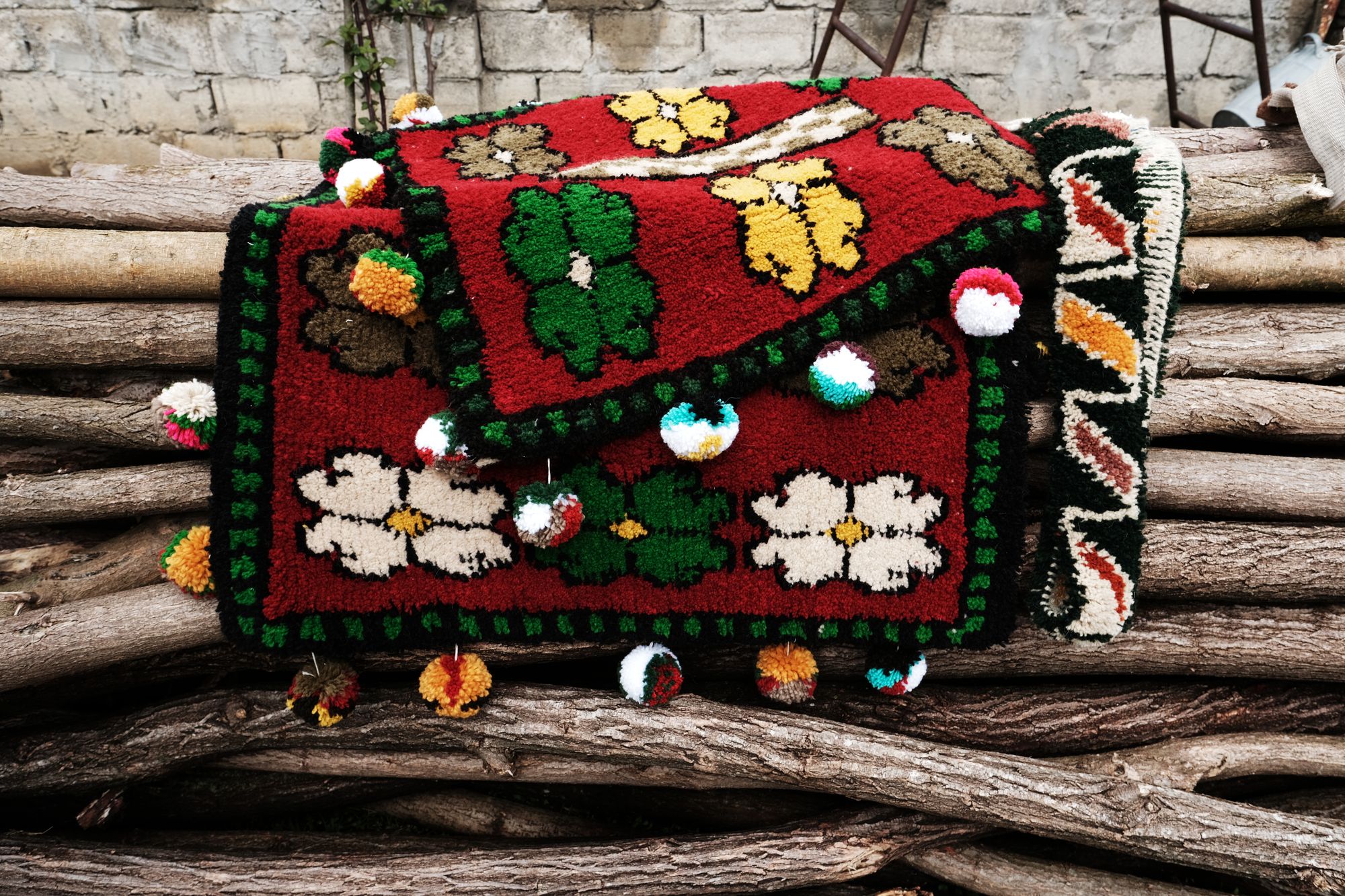
The heritage
A mountain tradition, kept alive by hand
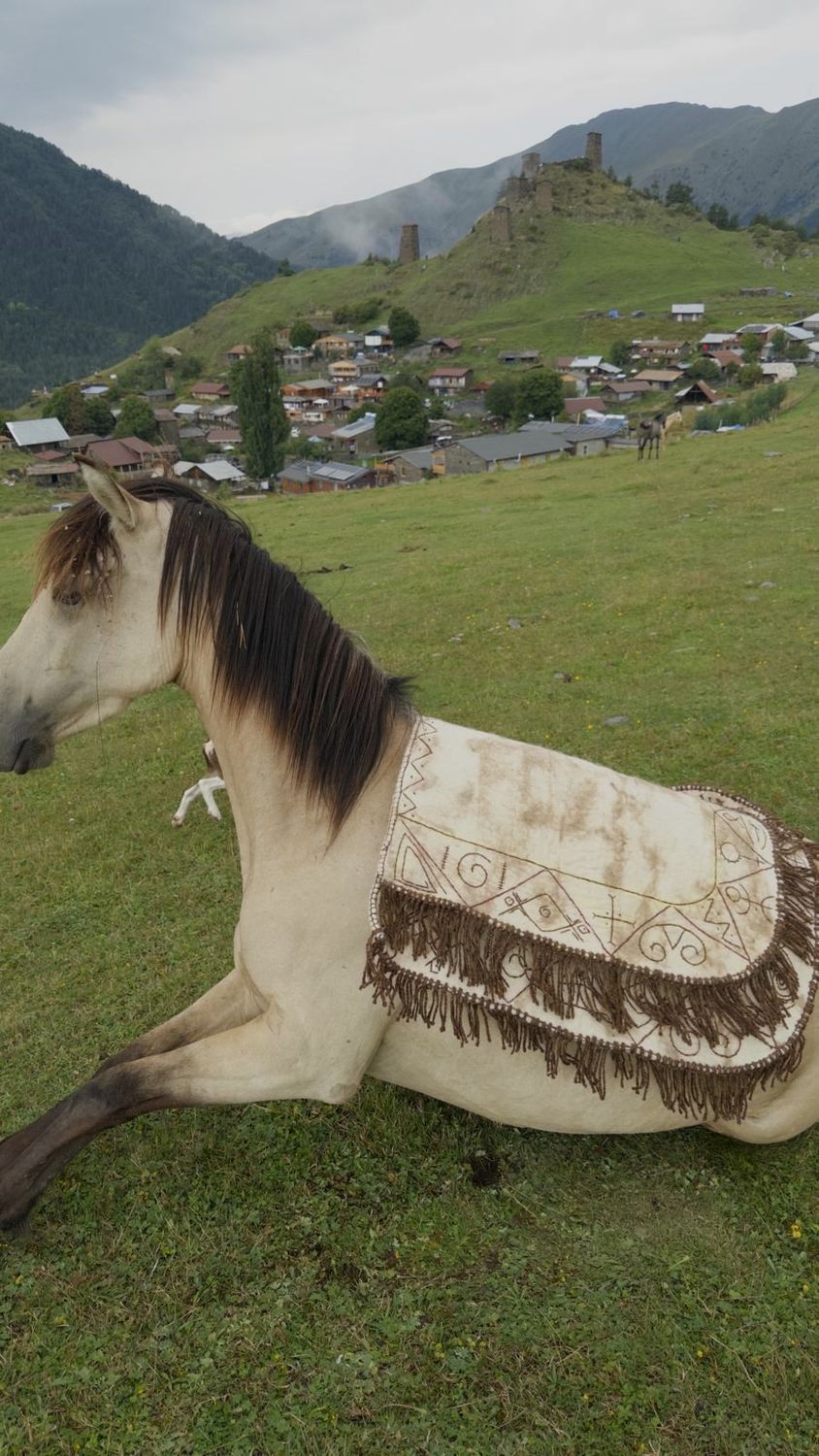
The Shabrak is a traditional horse blanket and saddle pad from Tusheti, a remote highland region of the Caucasus in Georgia, where shepherds and riders work in a harsh mountain climate. Tushetian wool is strong, lustrous and elastic, and it takes natural dye beautifully.
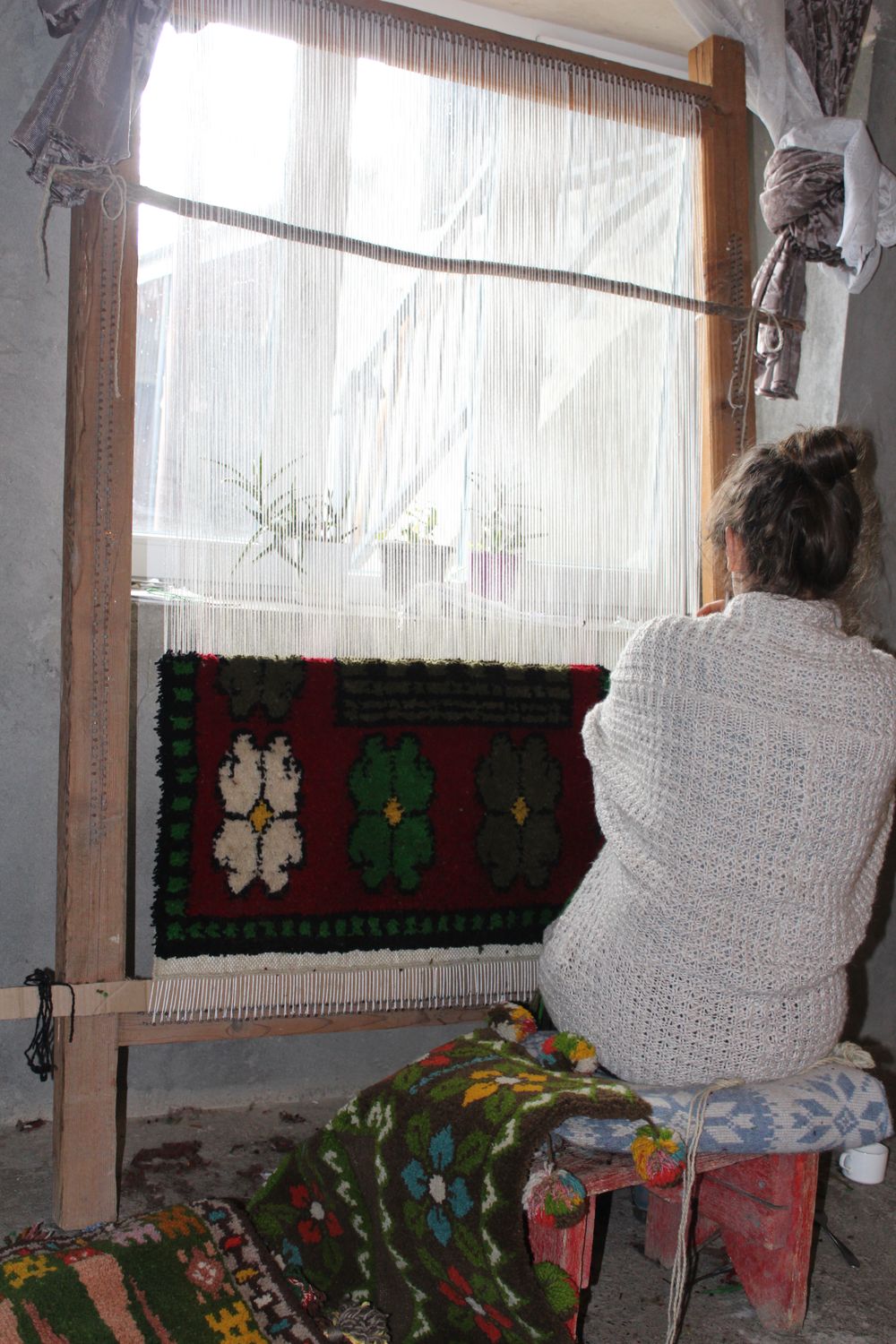
Each piece here is made by Irma Kitidze. Her family are shepherds who make Tushetian sheep's-skin cheese, and she grew up knitting scarves, gaiters and socks with her mother. In 2019 she enrolled in a vocational school to relearn the old Tushetian methods of weaving, felting and loom work, and she was captivated by traditional horse blankets because every part is made by hand.
Her designs use Tushetian ornaments and traditional pictograms. She plans nothing in advance and decides what to embroider as she works, so every piece is unique.
A craft with a purpose
Wool that was being thrown away
Tushetian wool was once among the most valuable products of Georgian farming. Today, with transport from Tusheti expensive and few buyers, shepherds throw away or burn tons of it. Irma's work gives that wool a second life. Offcuts from every piece are kept and made into small embroidered felt accessories, so nothing is wasted.
The collection
Pieces from the workshop
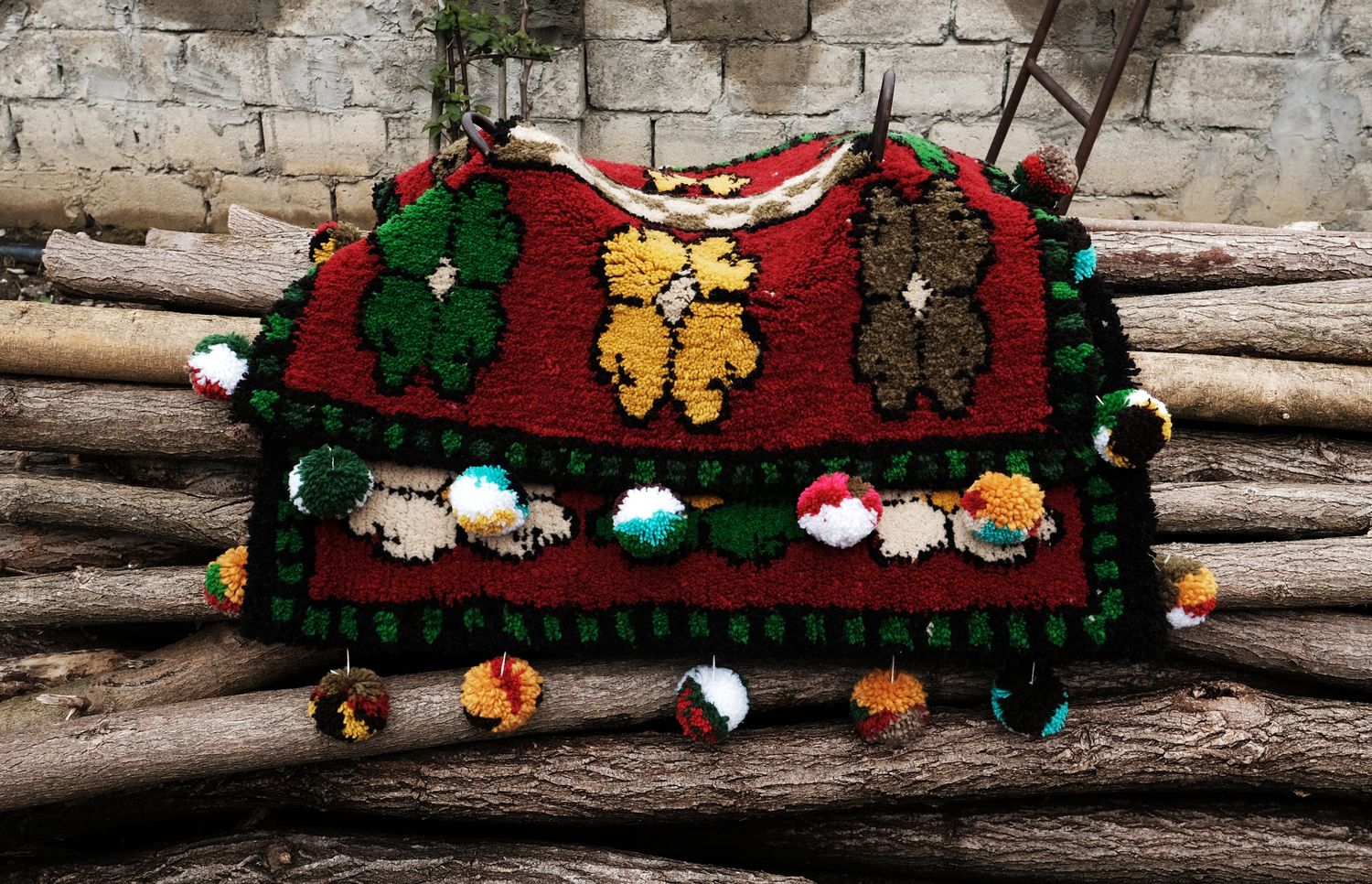
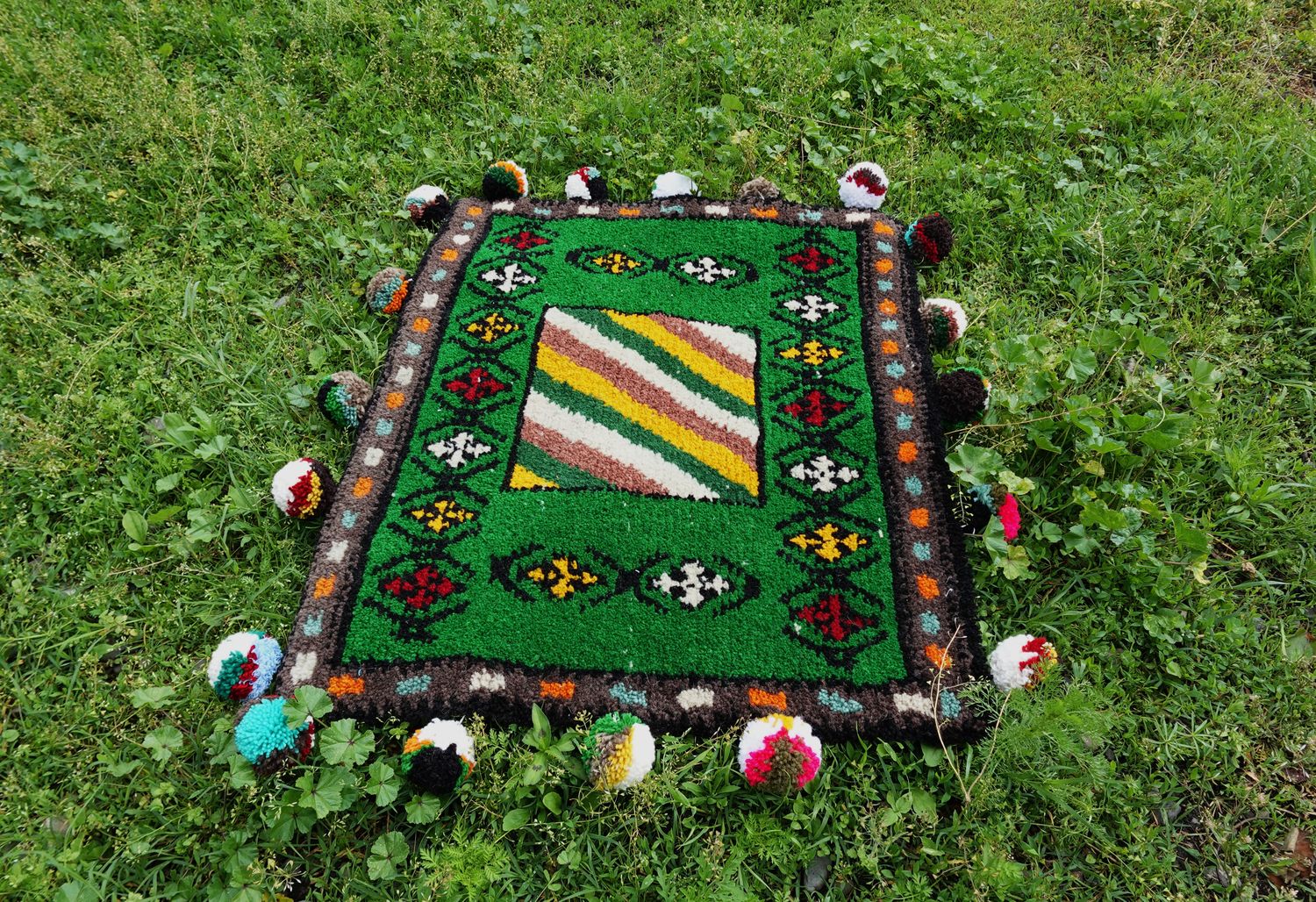
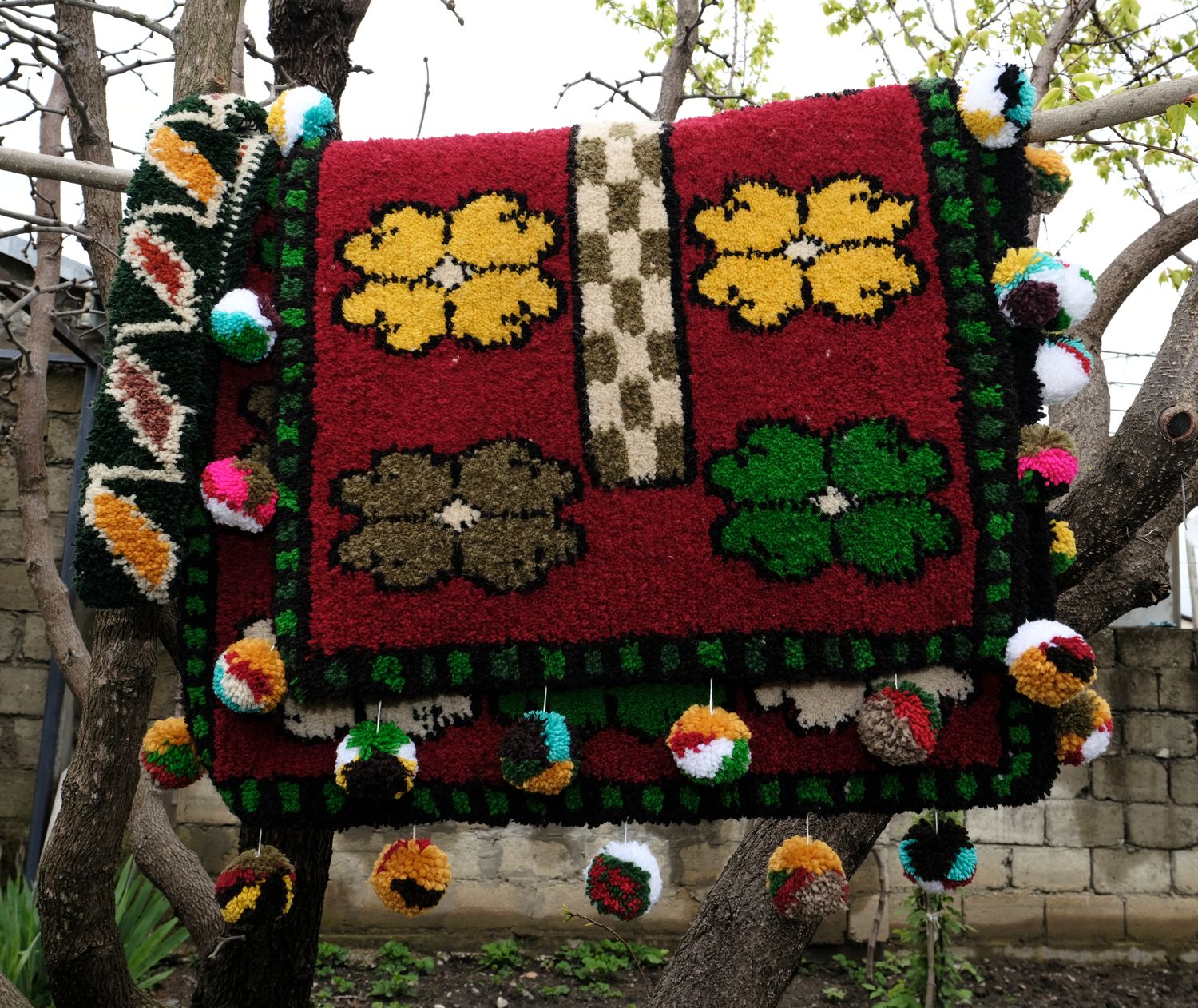
Every Shabrak is a single commission. What you see here are recent pieces, shown as examples of the range. Your piece will be made for you and will not be identical.
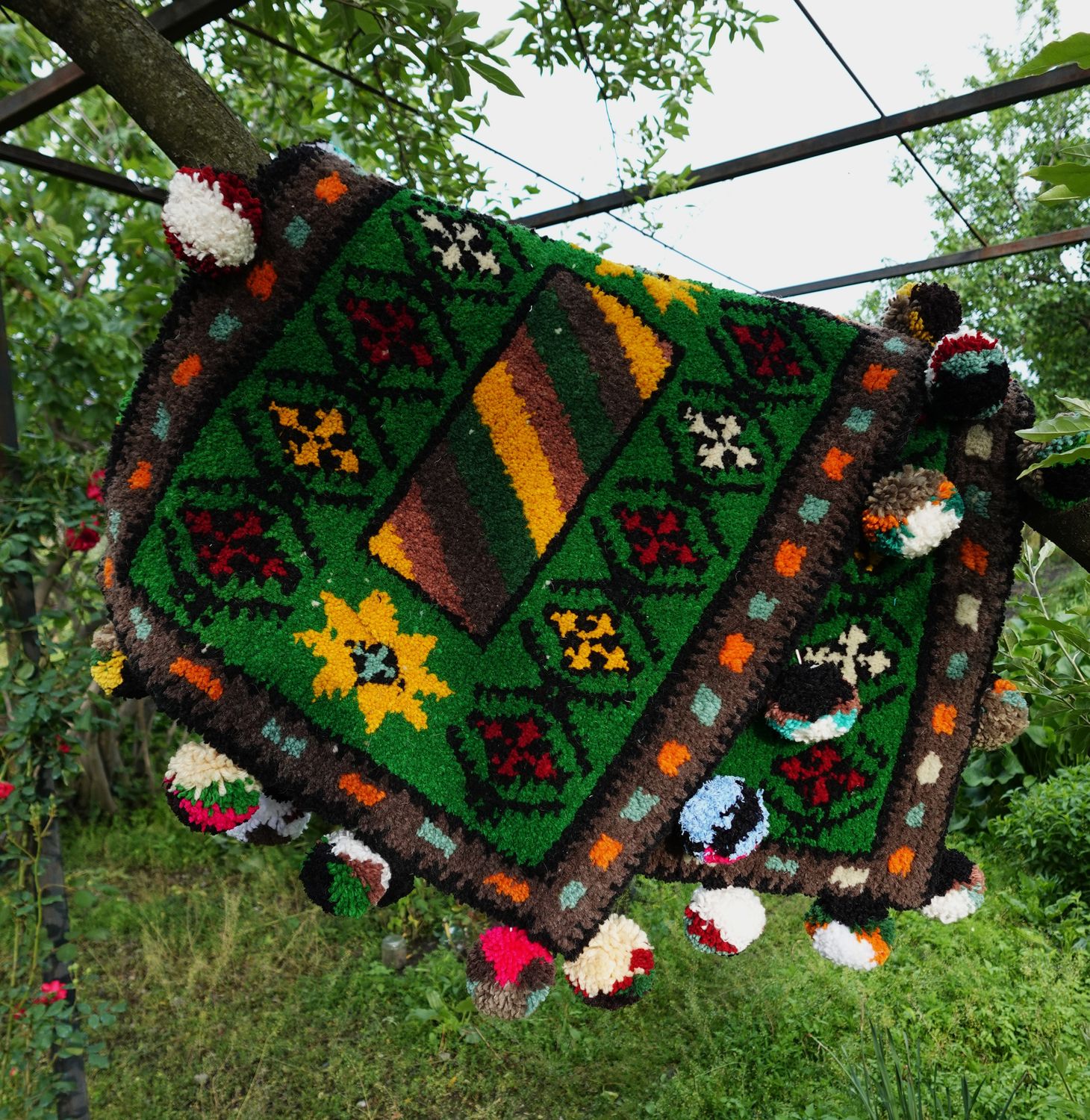
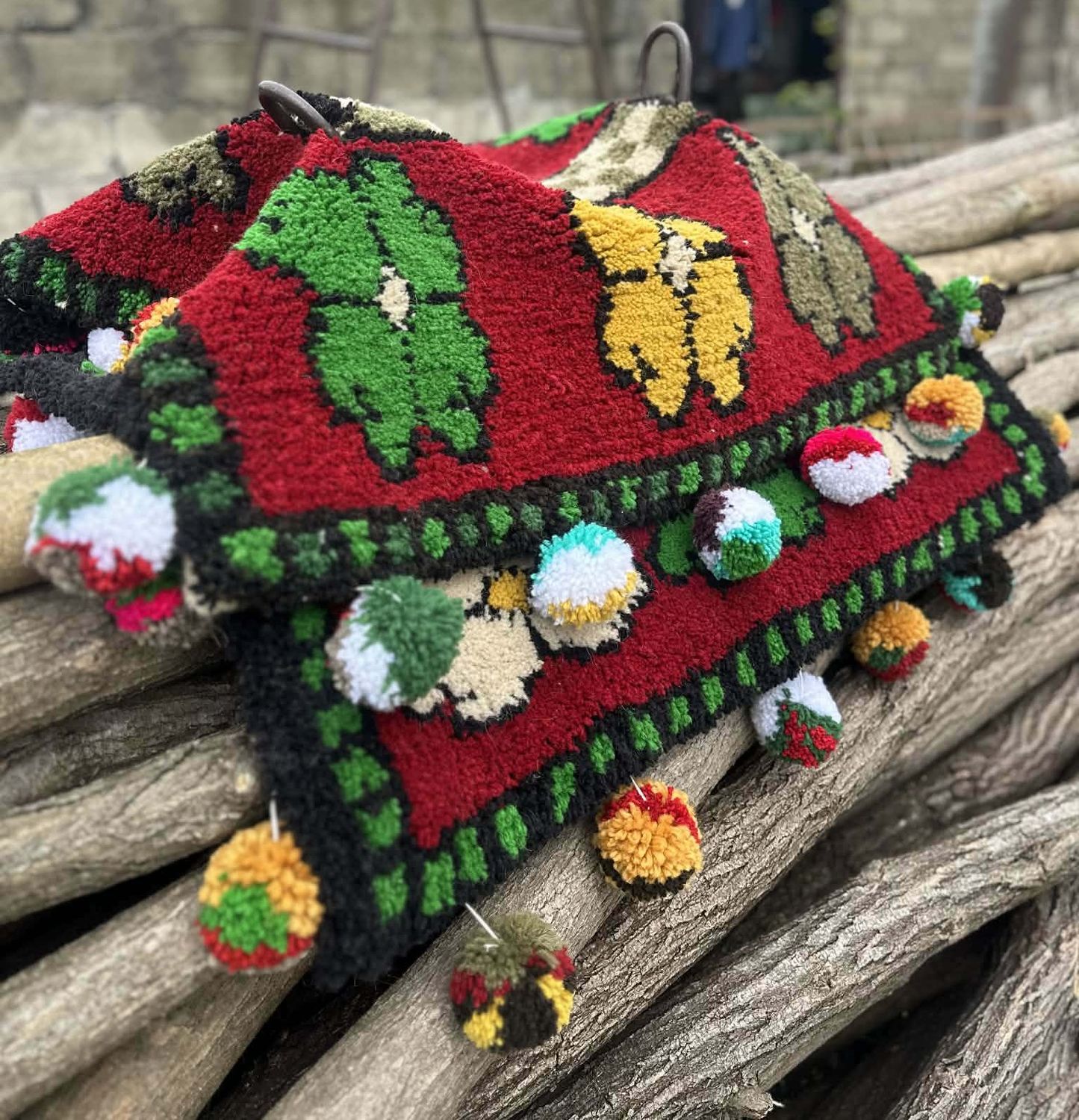
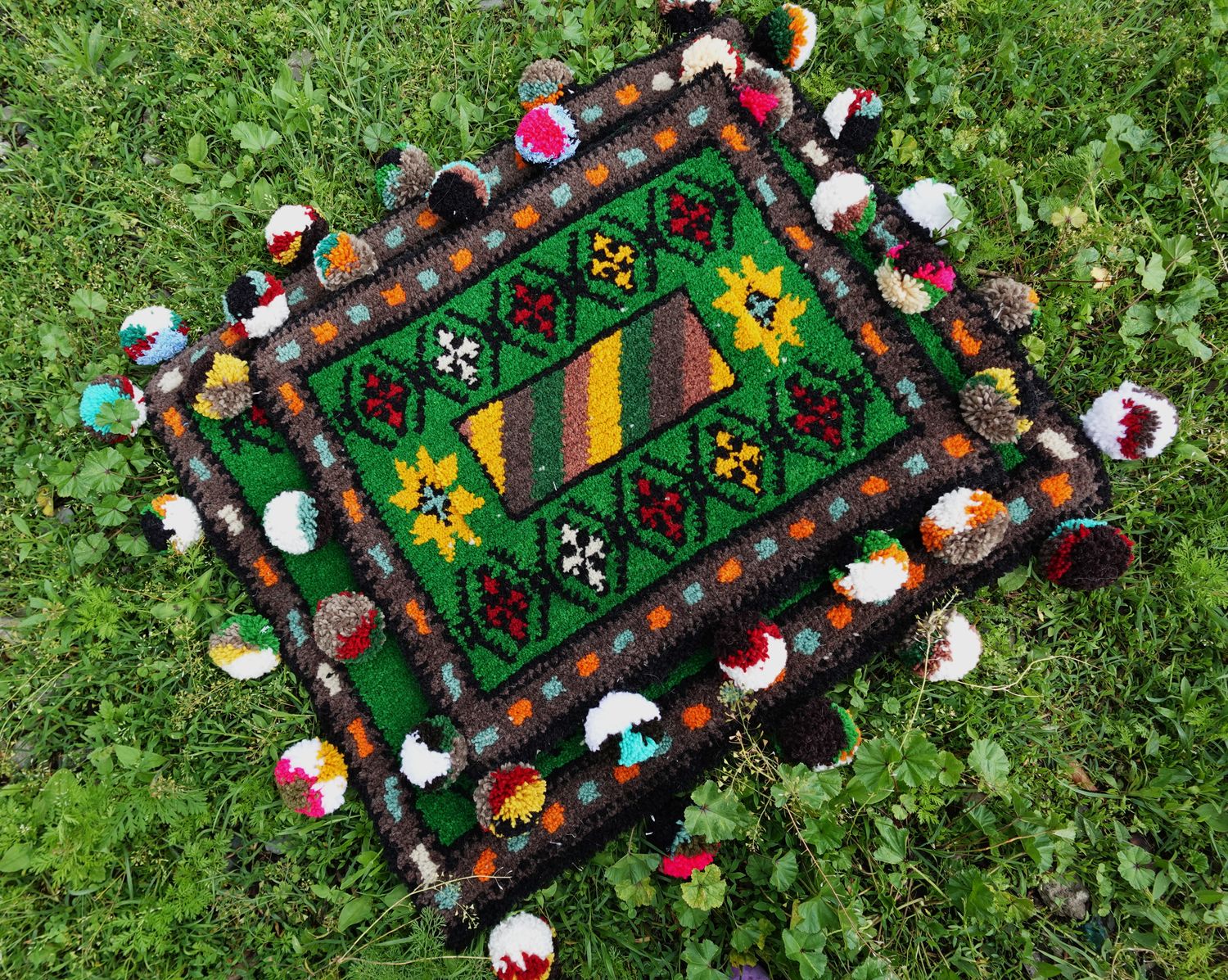
Hand-woven pile
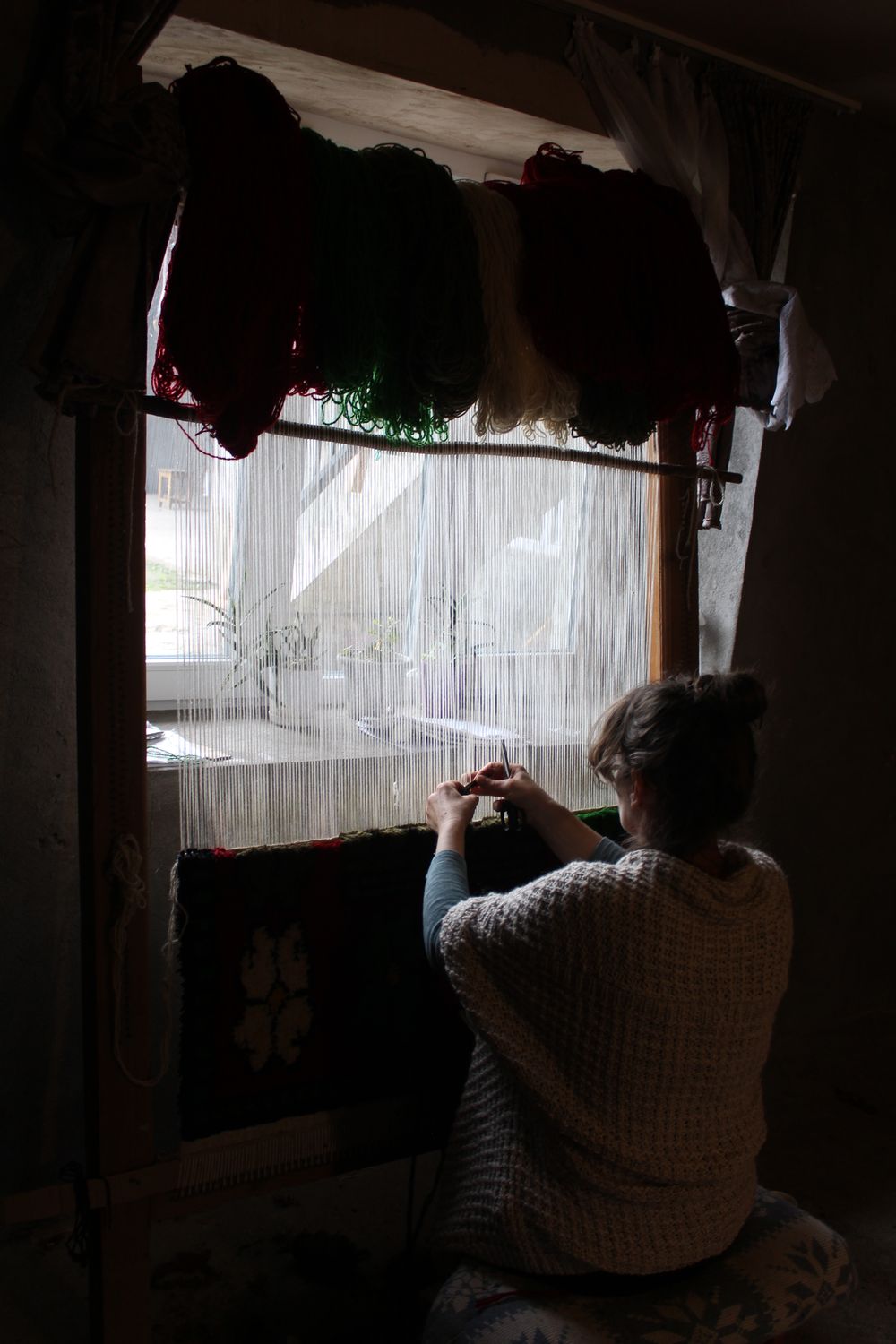
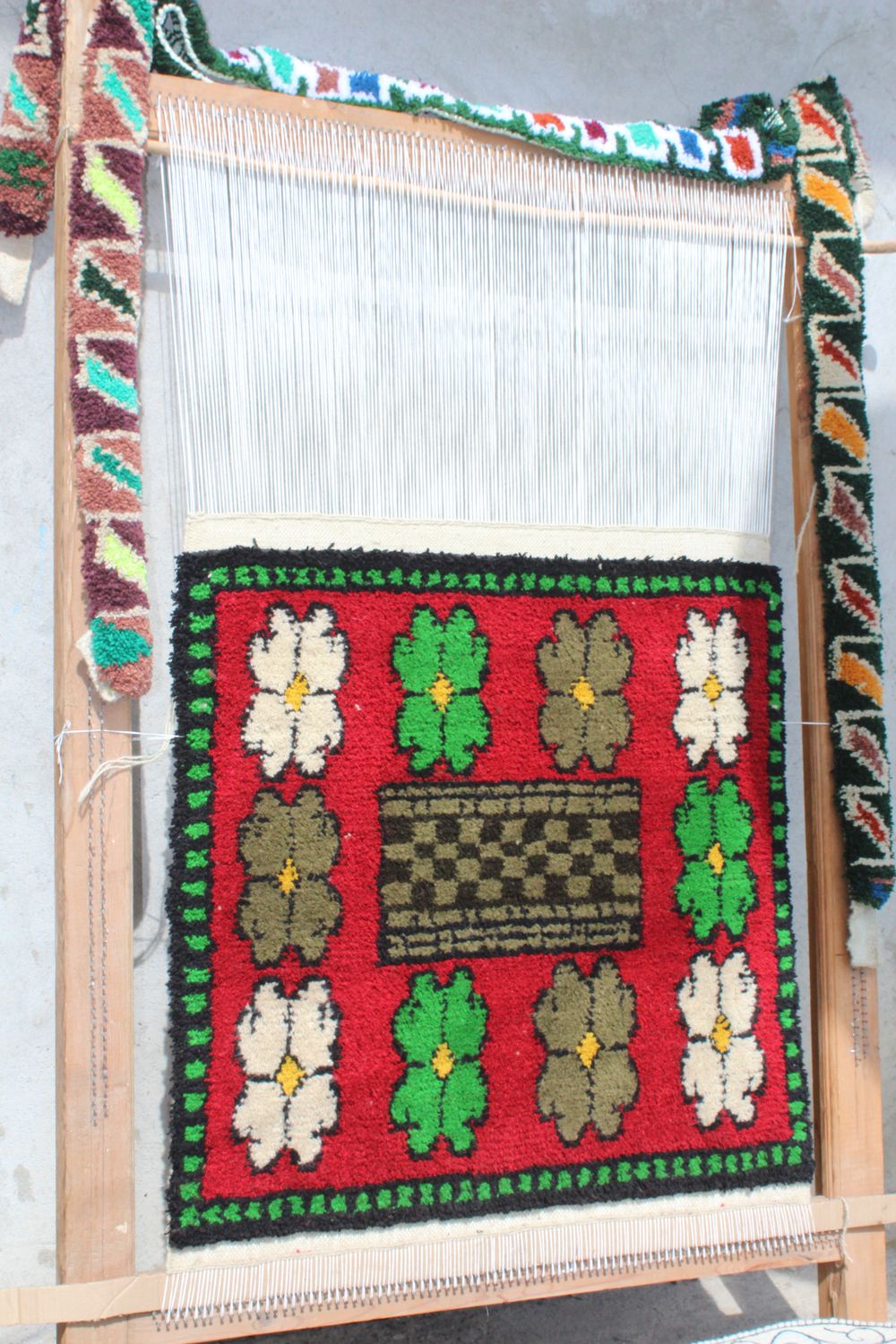
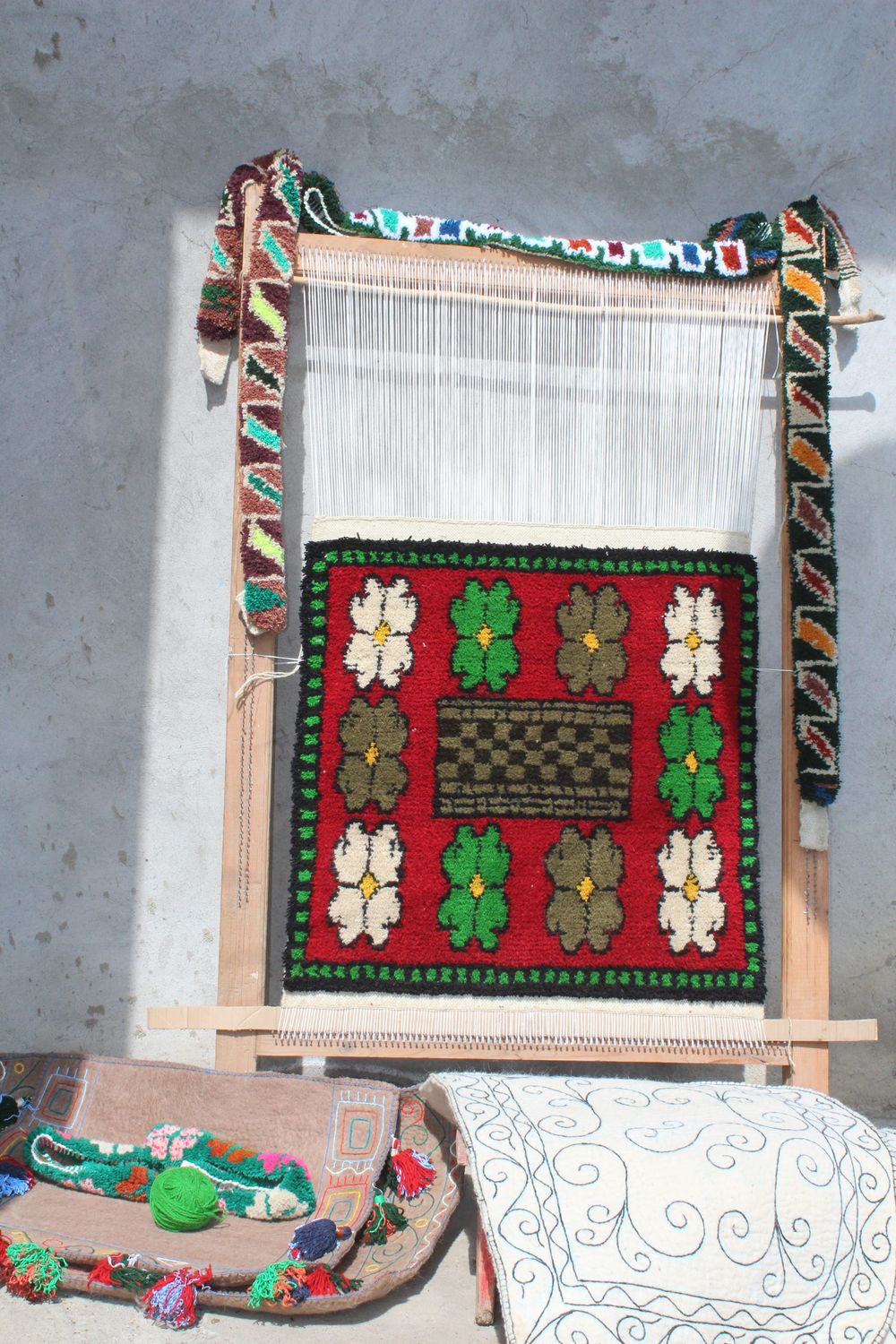
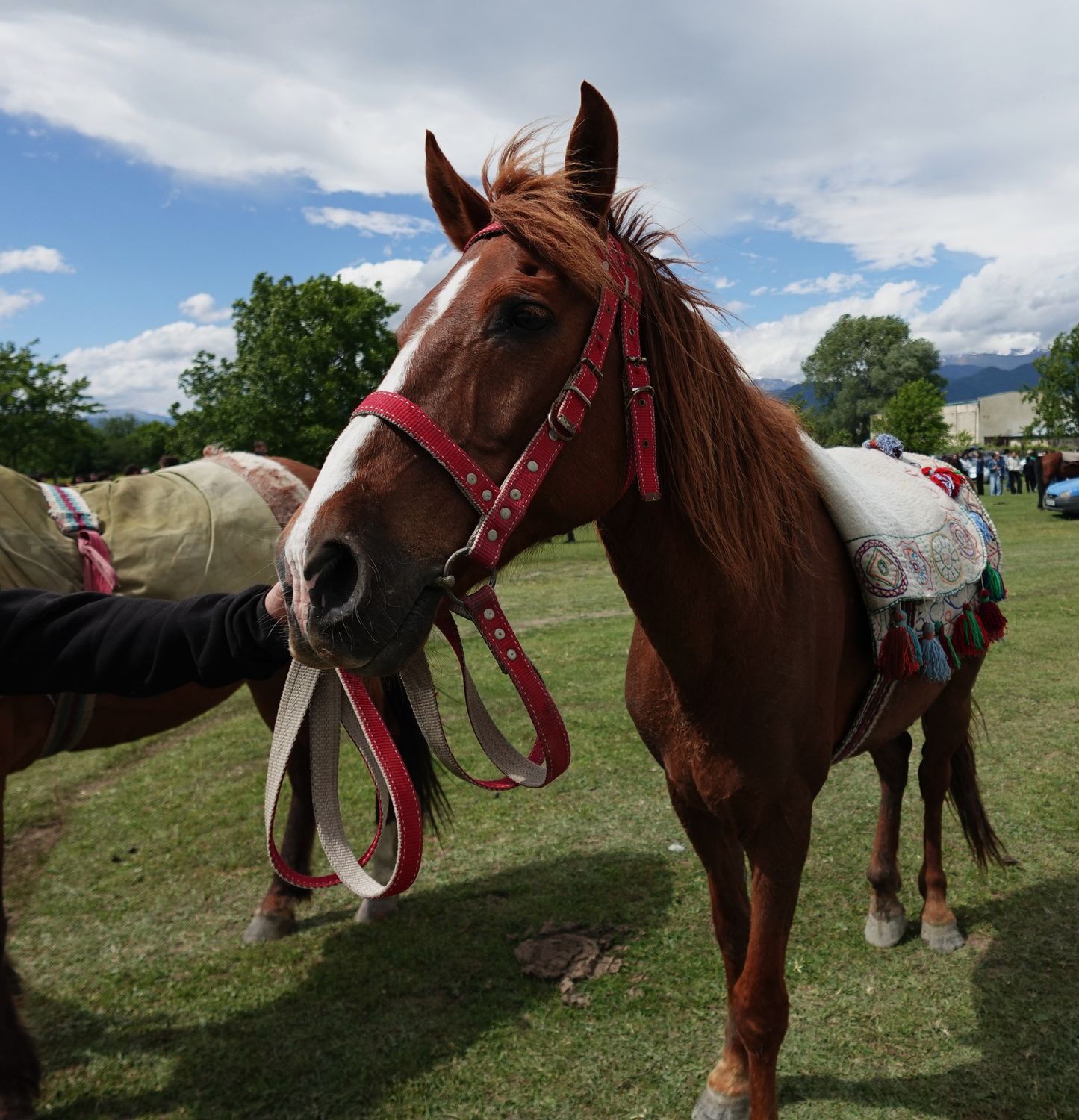
Woven on a traditional wooden loom in dense wool pile, with flowers and geometric motifs and a border of coloured pompoms. These are the boldest pieces, and the strongest on a wall.
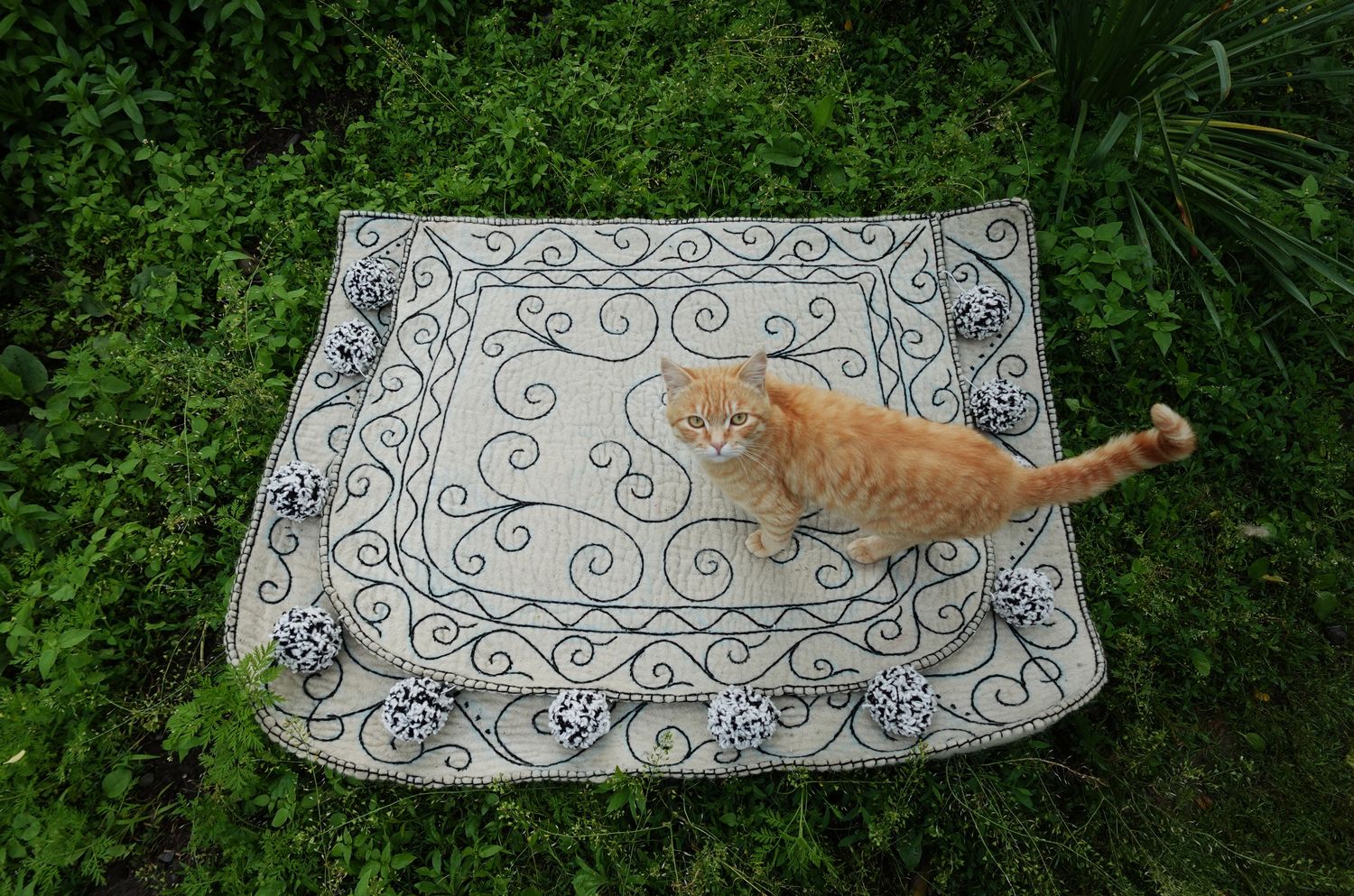
Embroidered felt
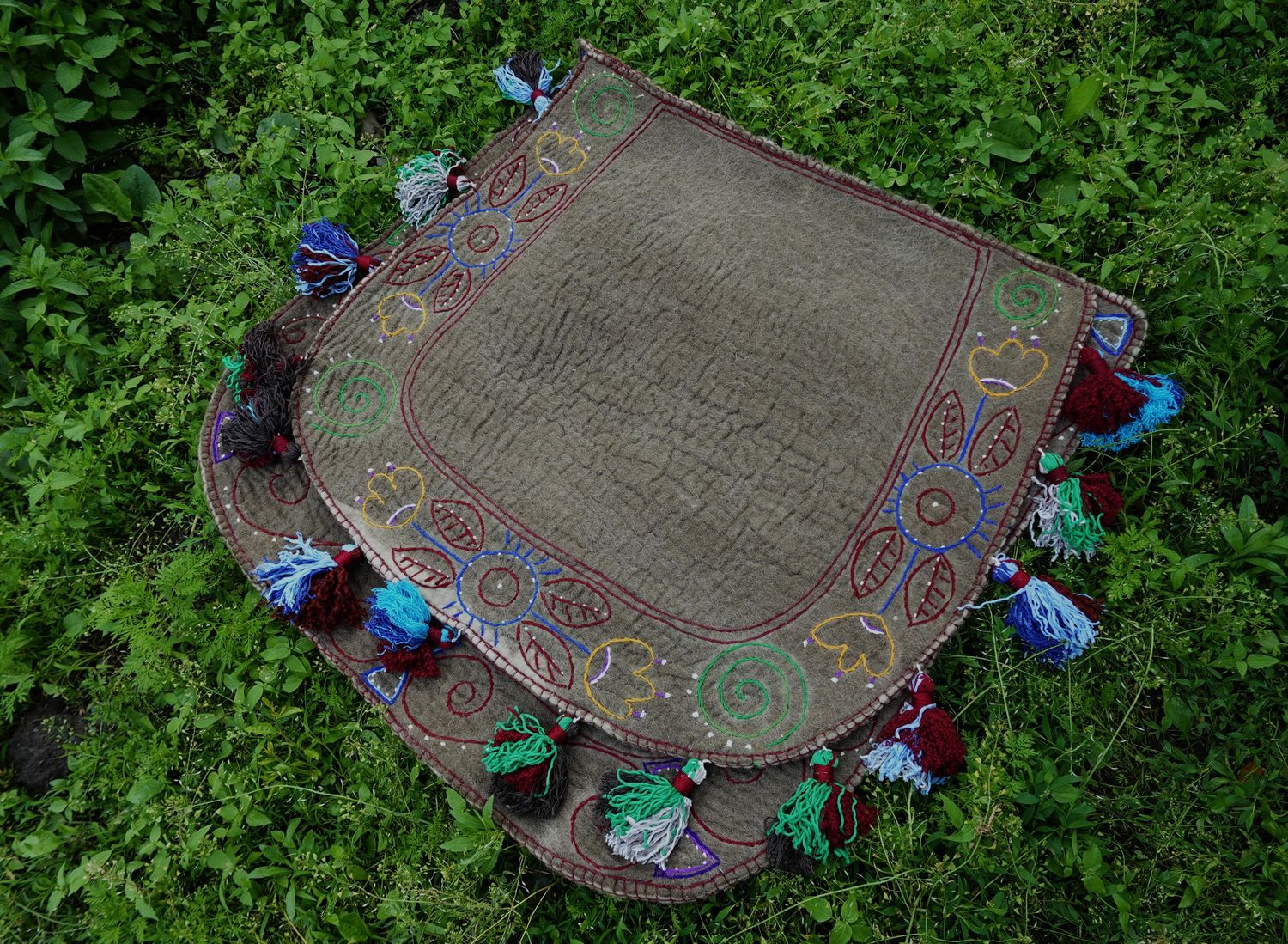
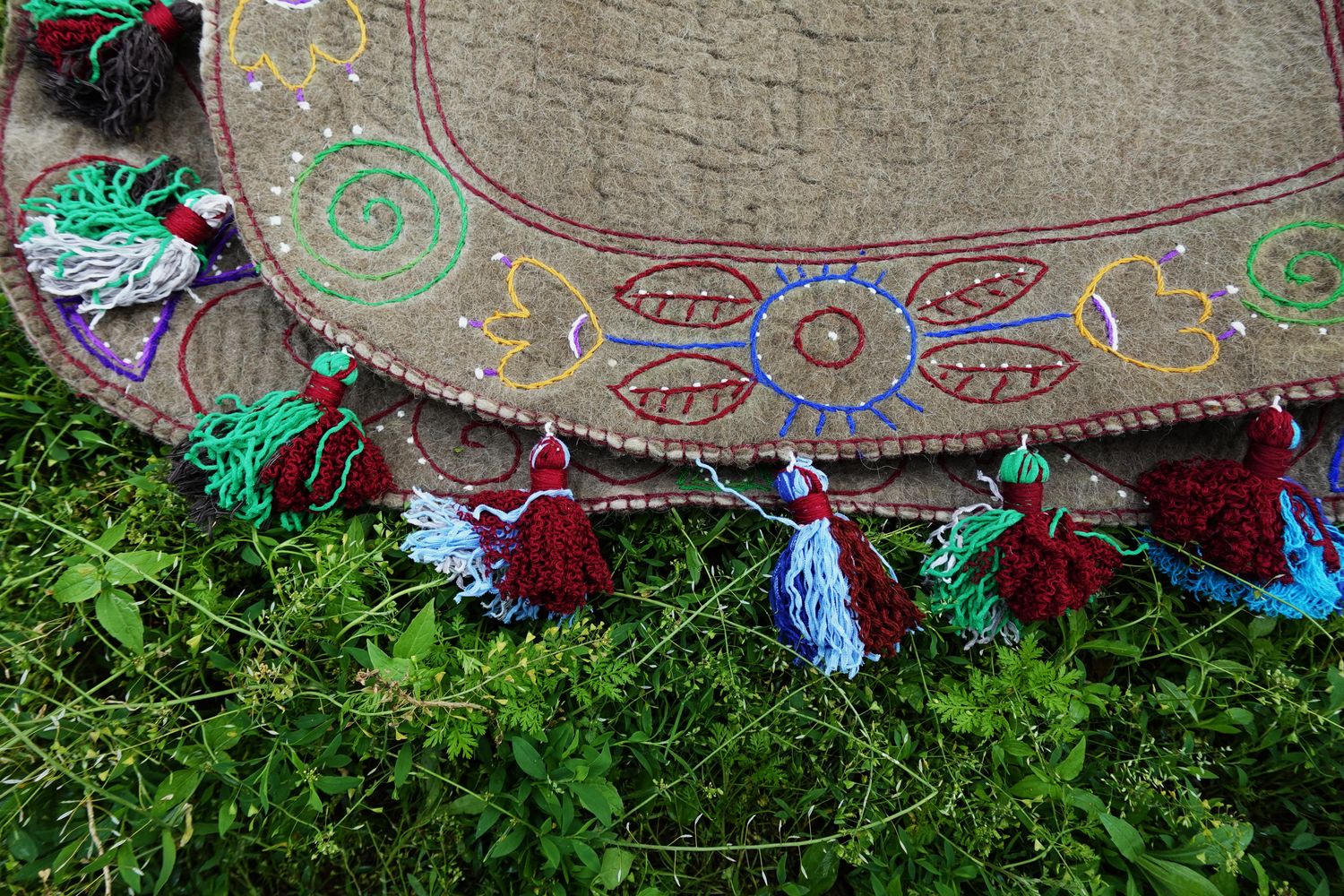
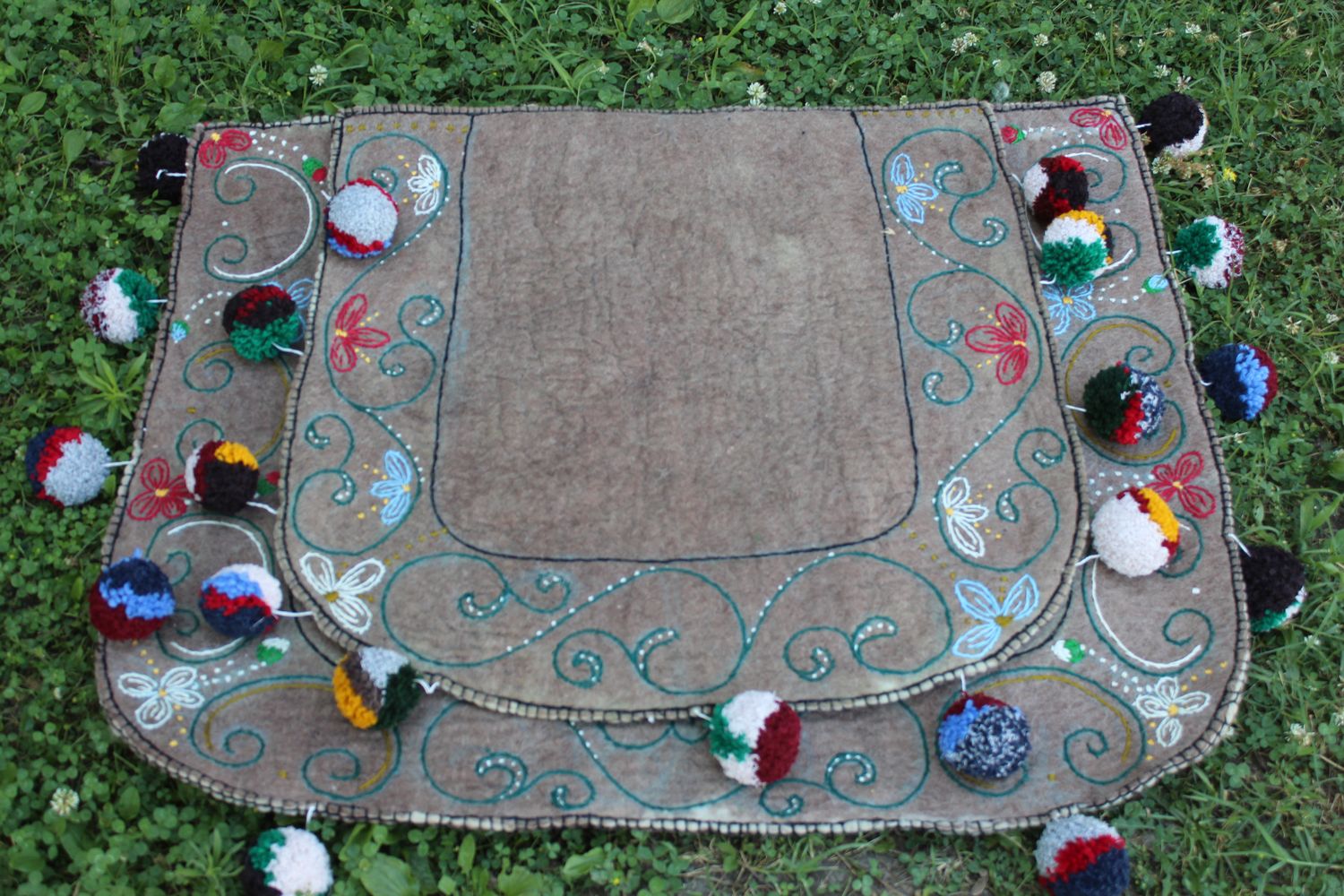
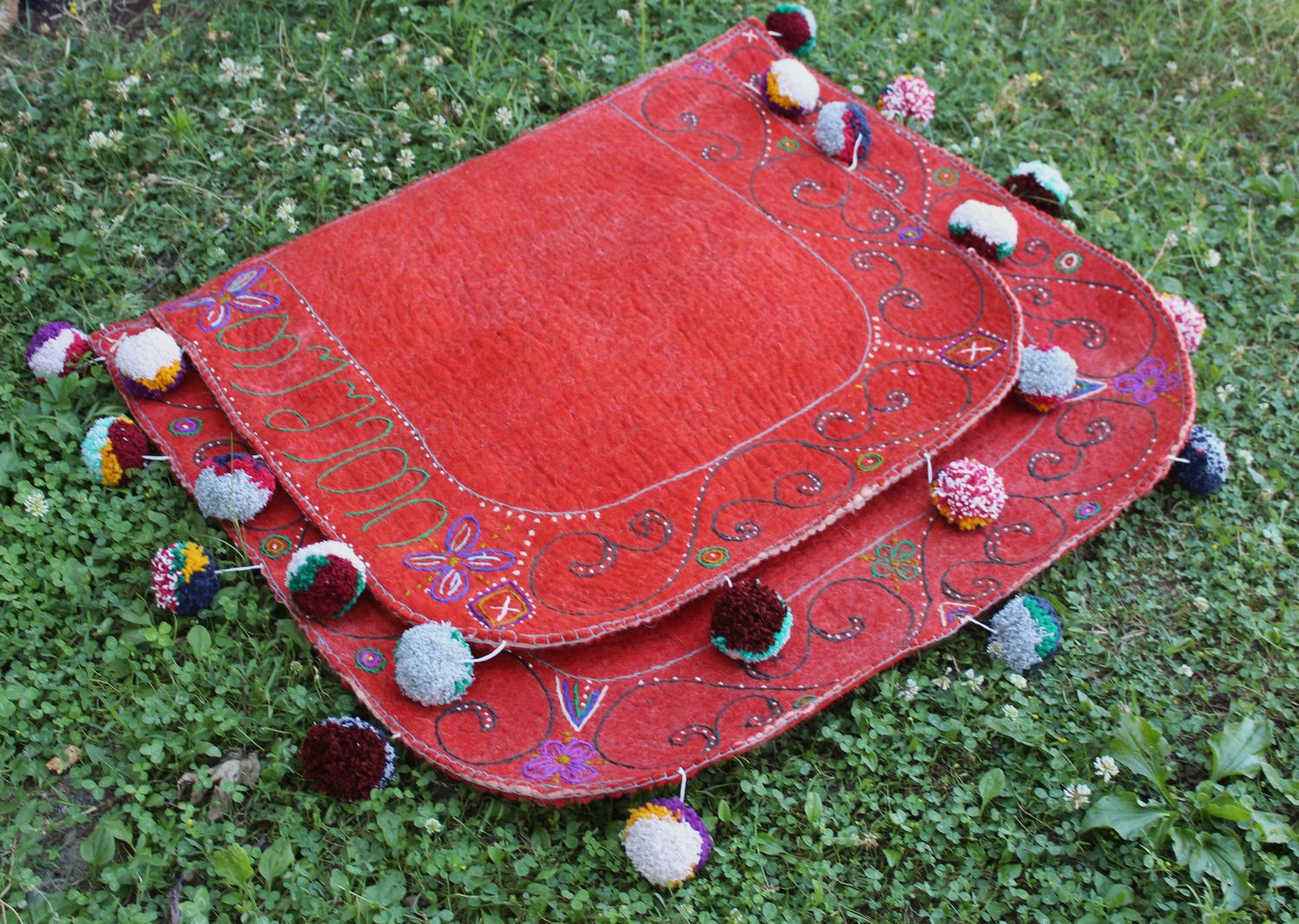
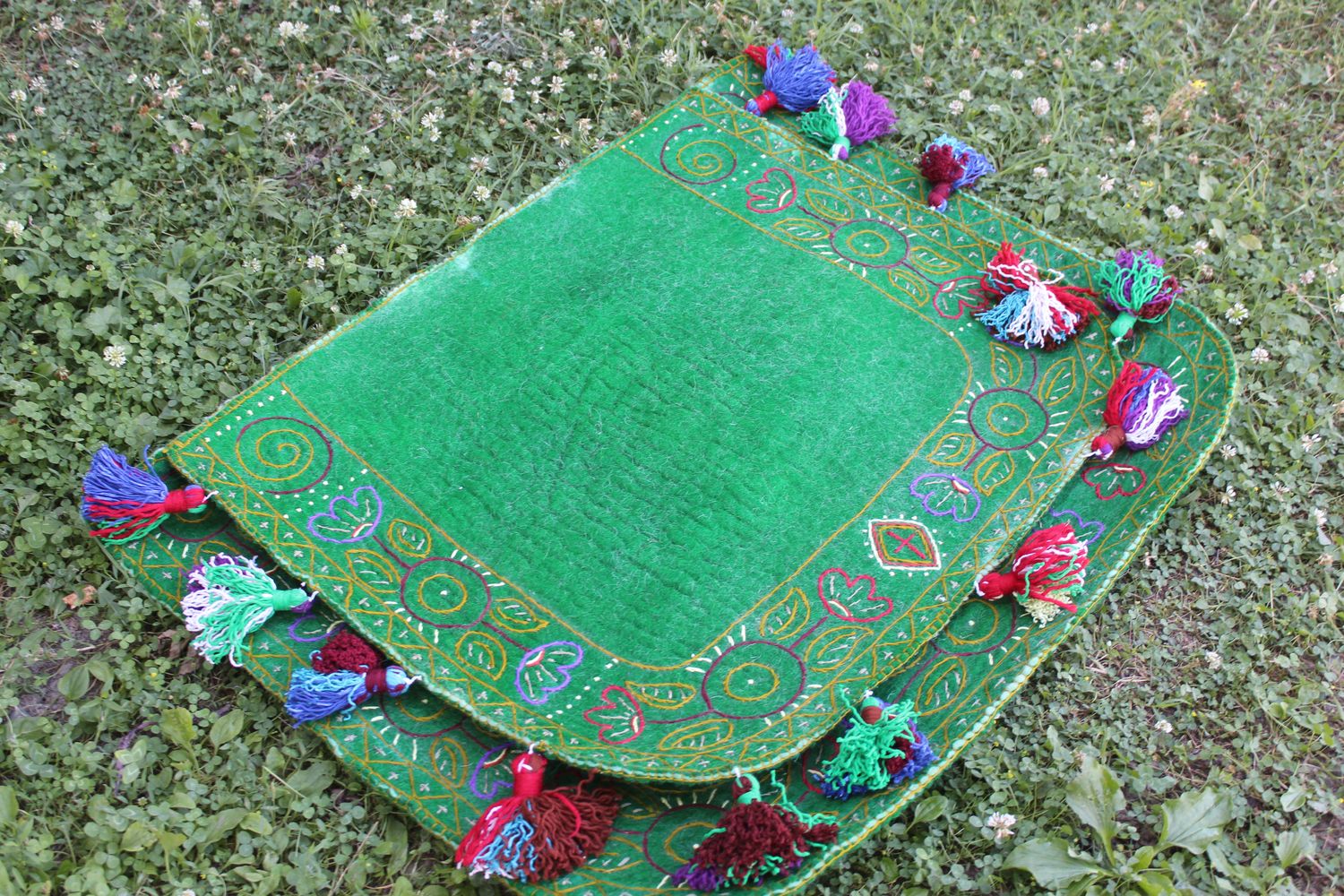
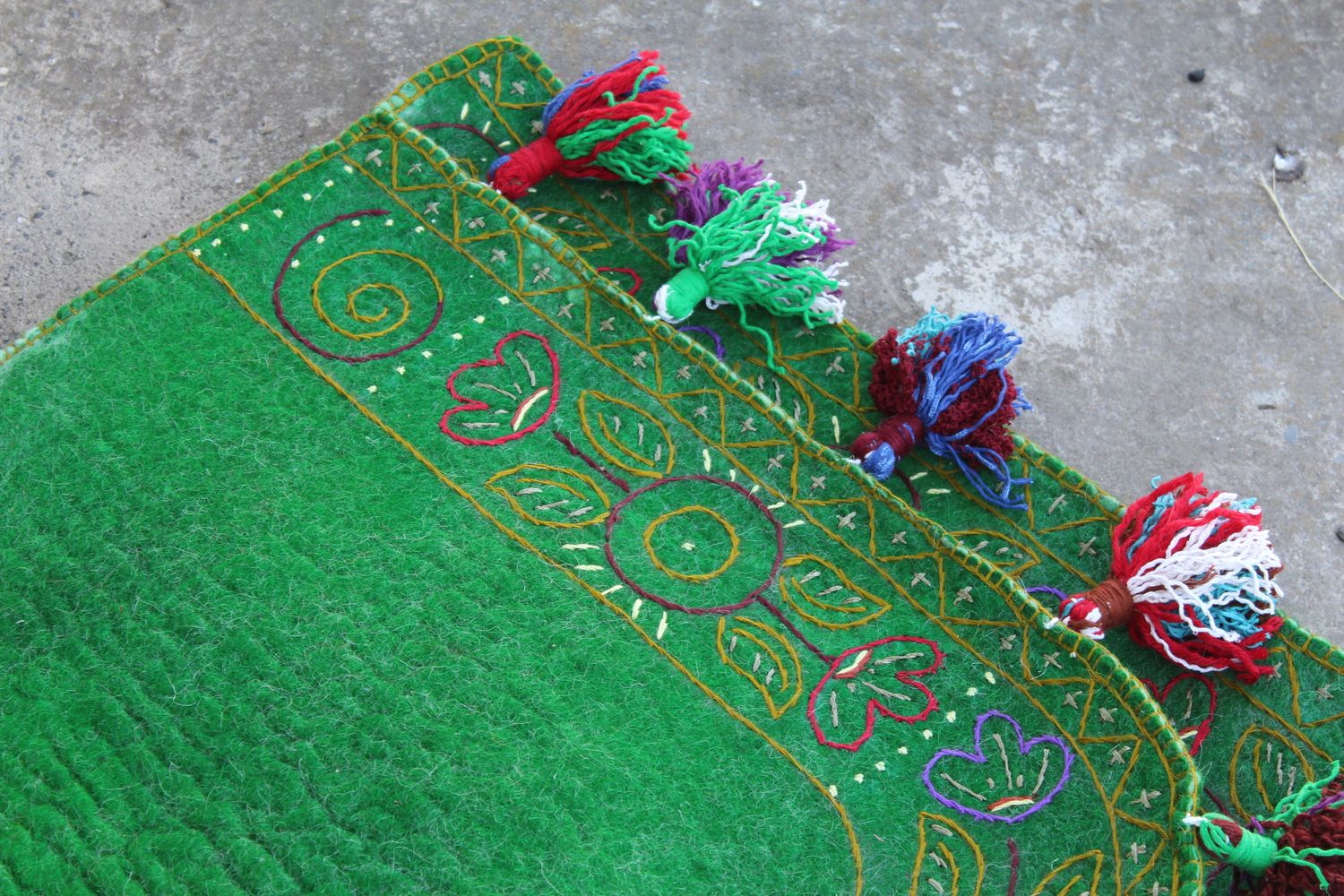
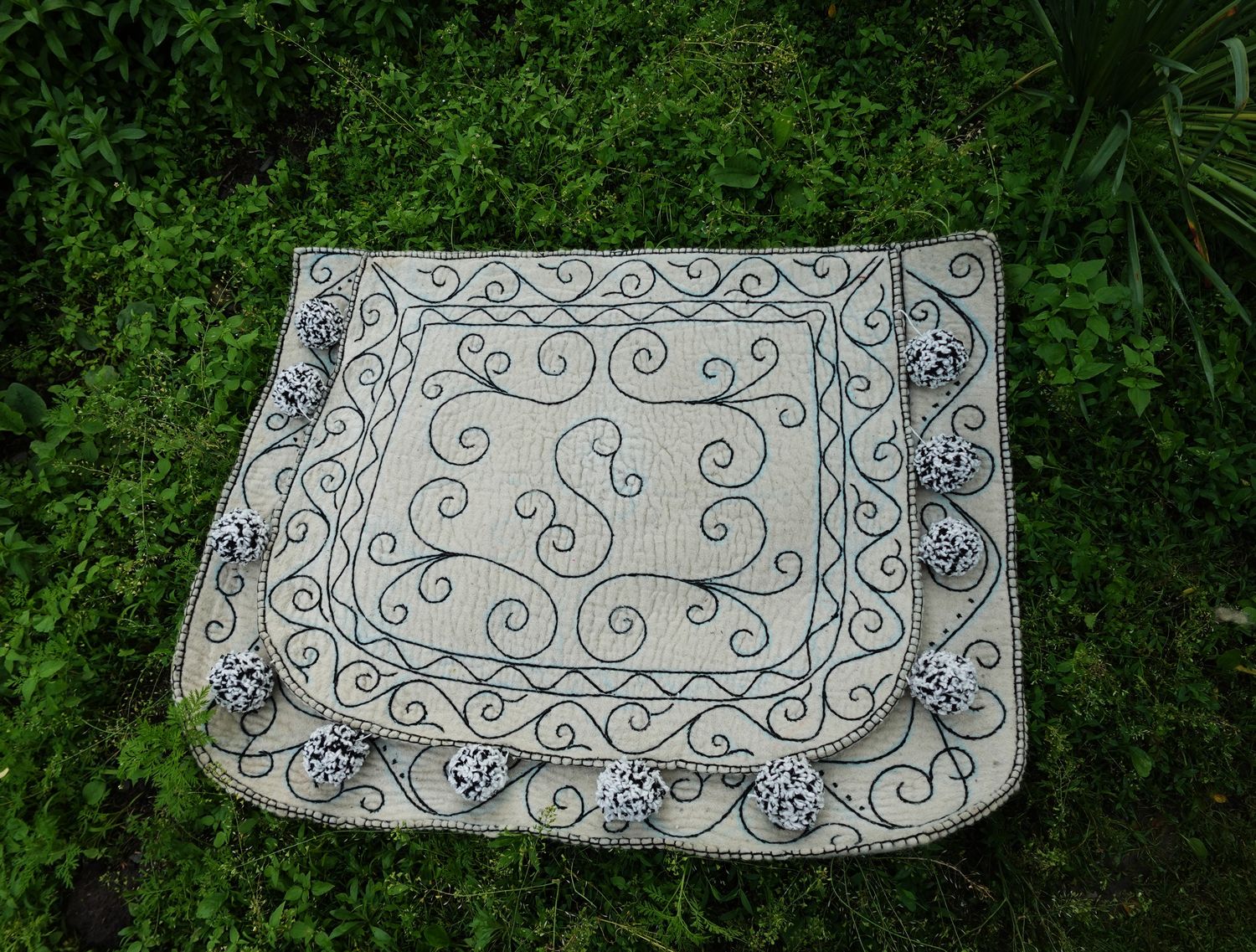
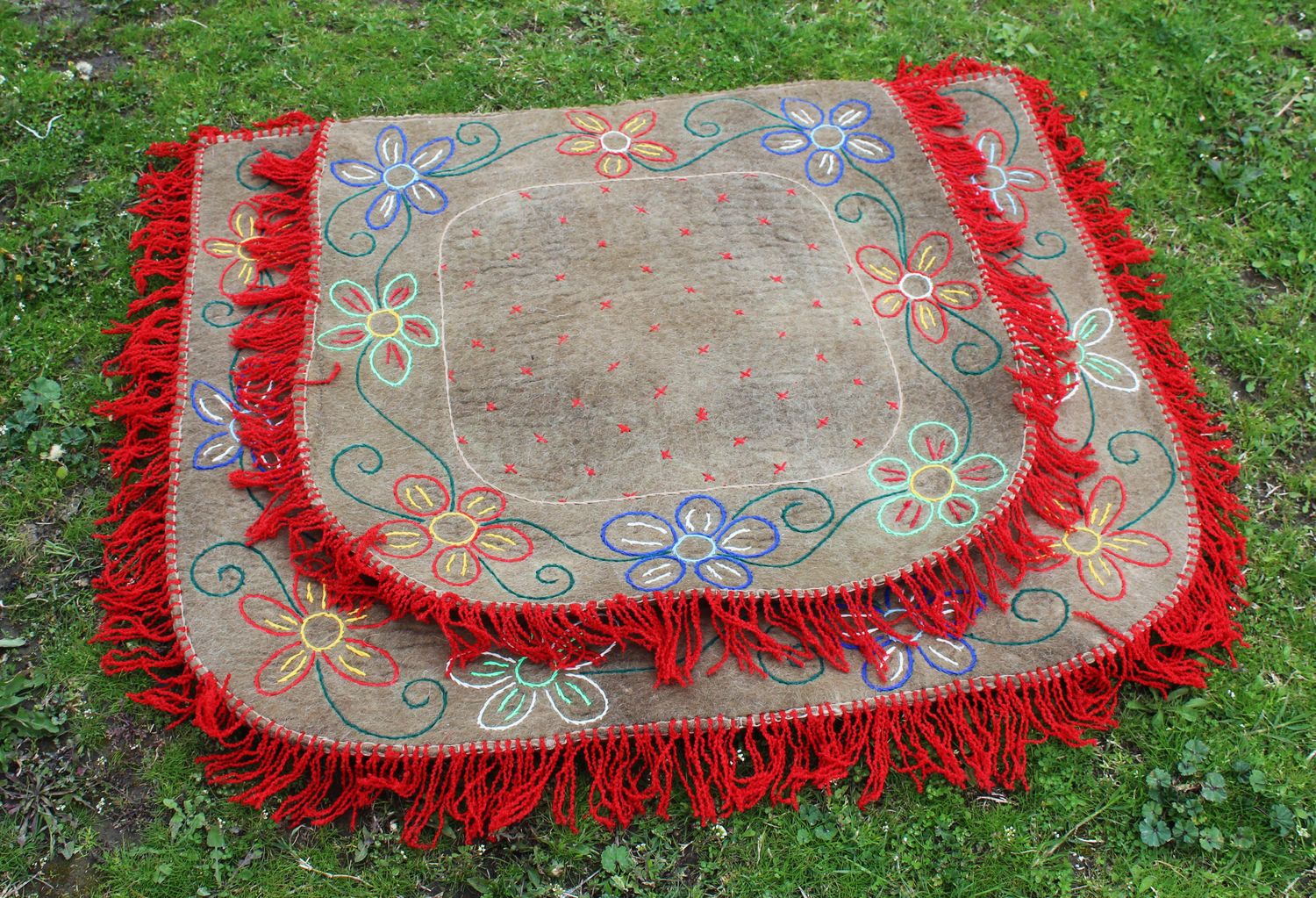
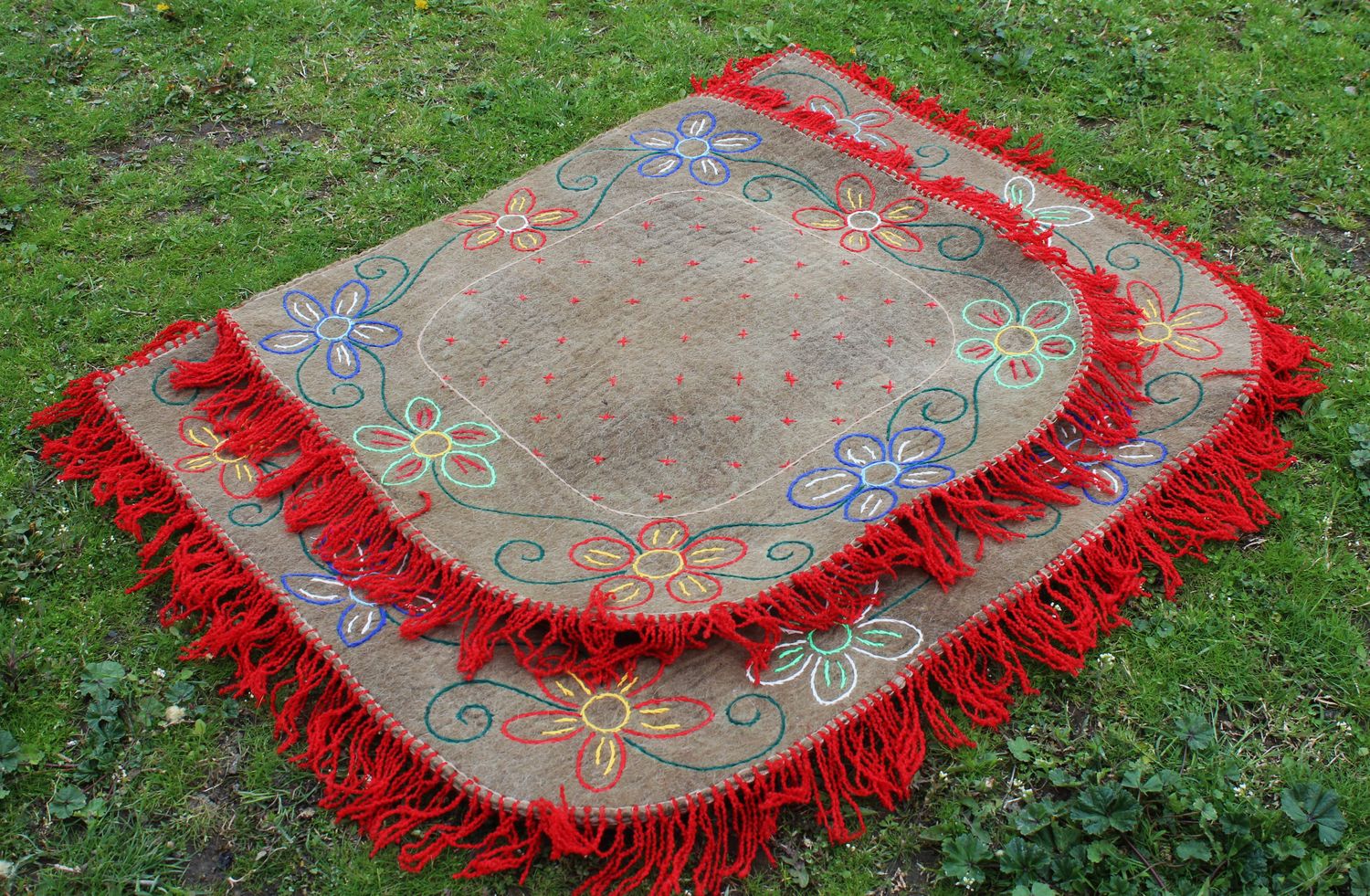
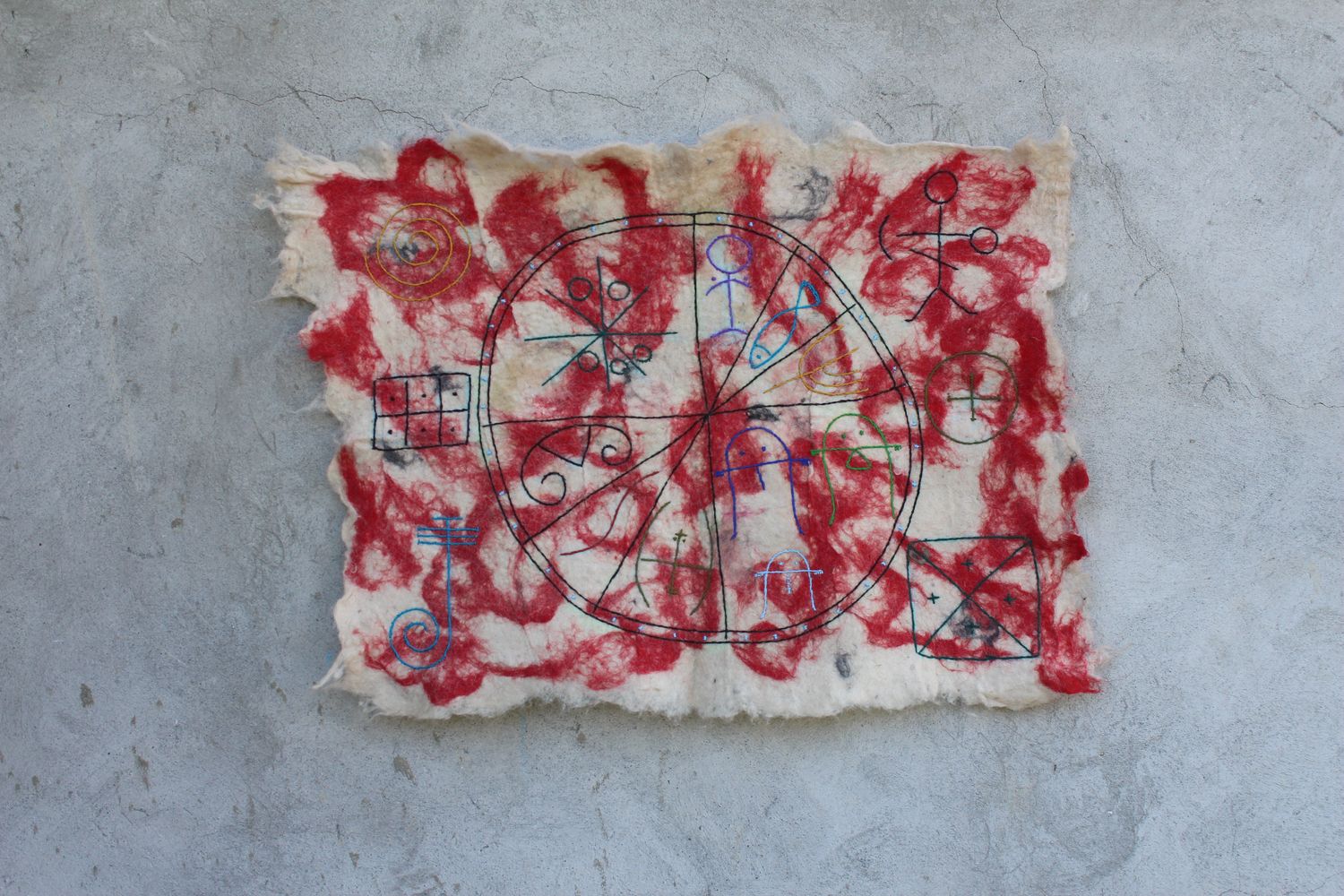
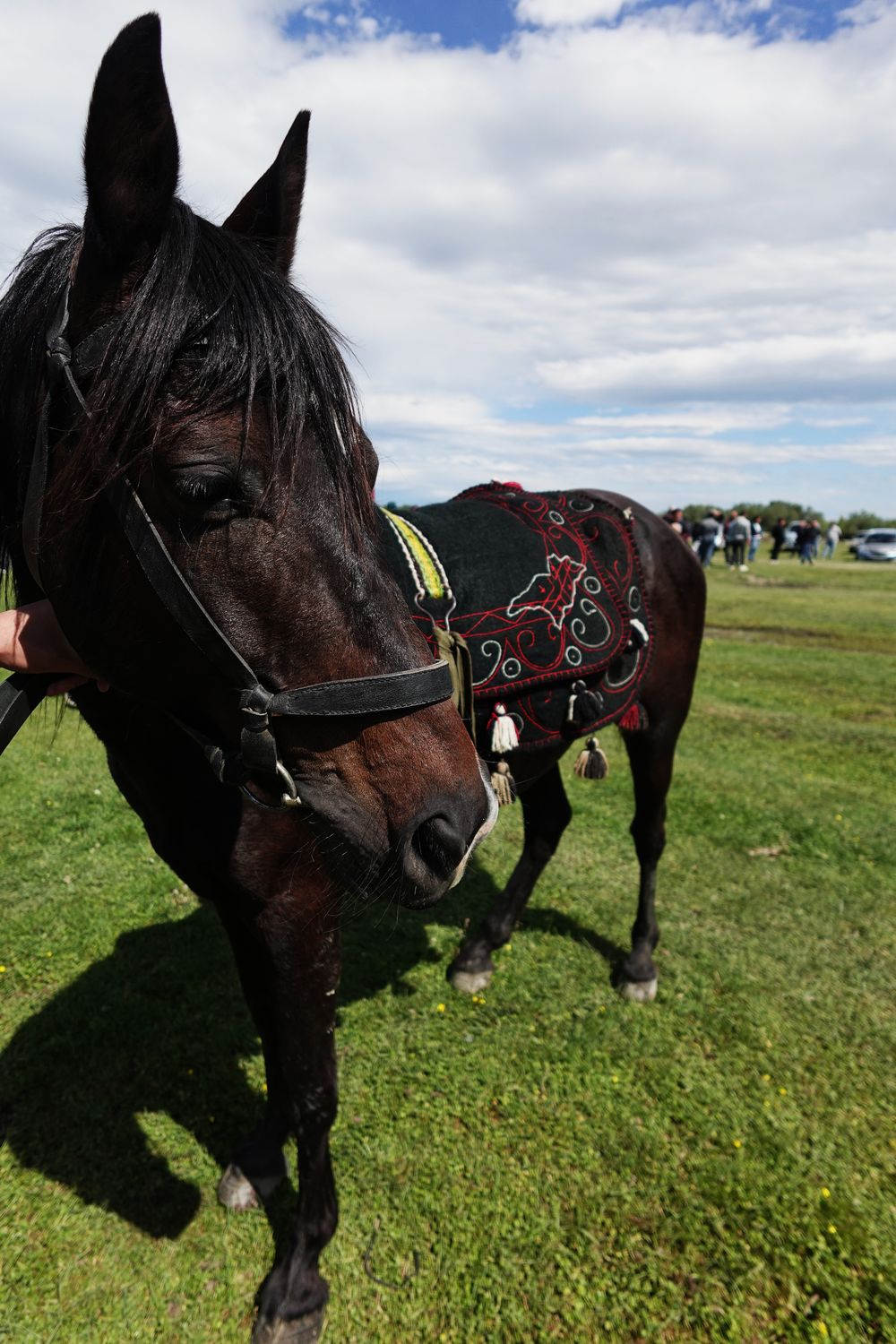
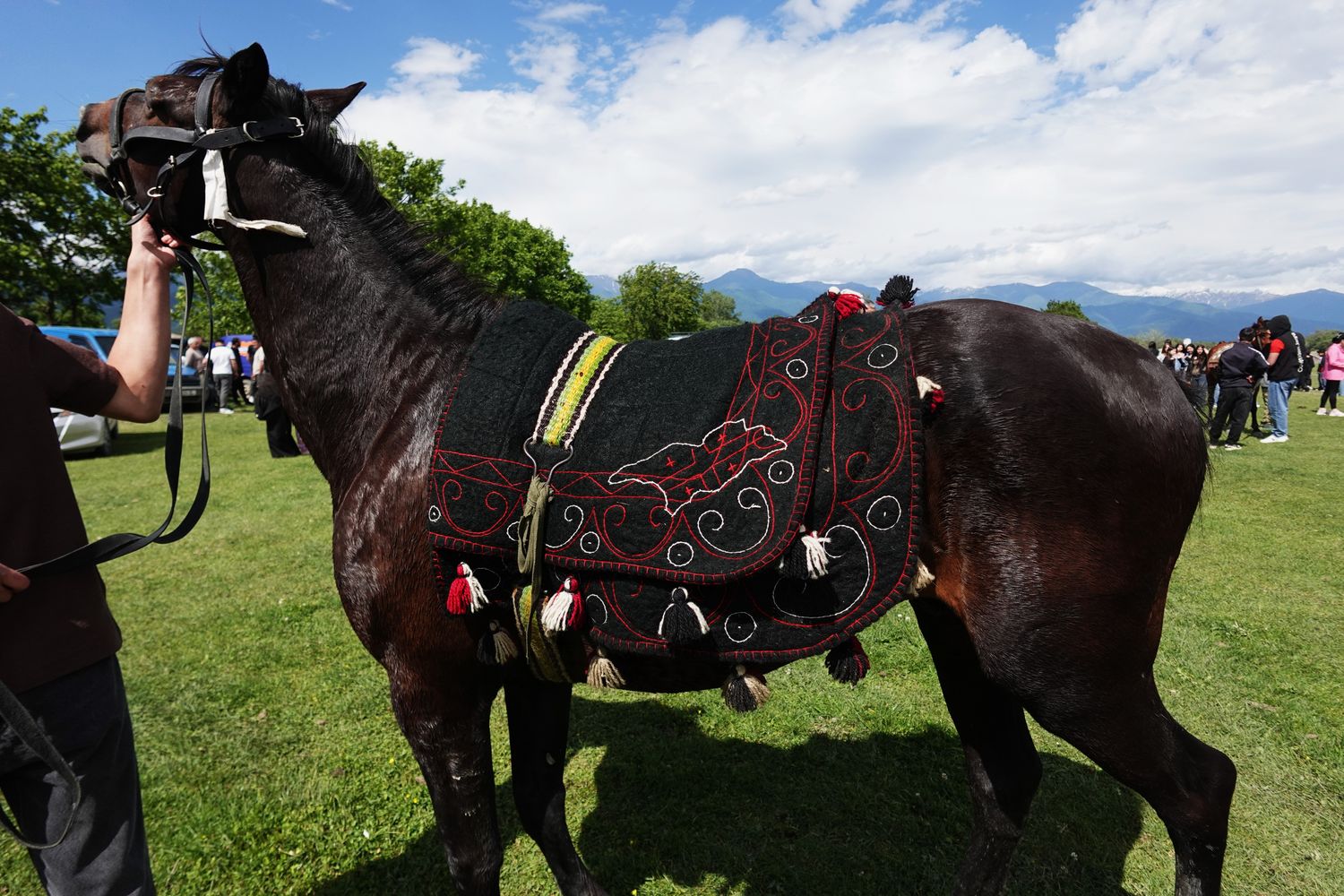
Wool felted by hand with hot water and soap, then embroidered with scrollwork, flowers and Tushetian ornament, and finished with tassels or pompoms. Colours range from natural grey and cream to deep red and green.
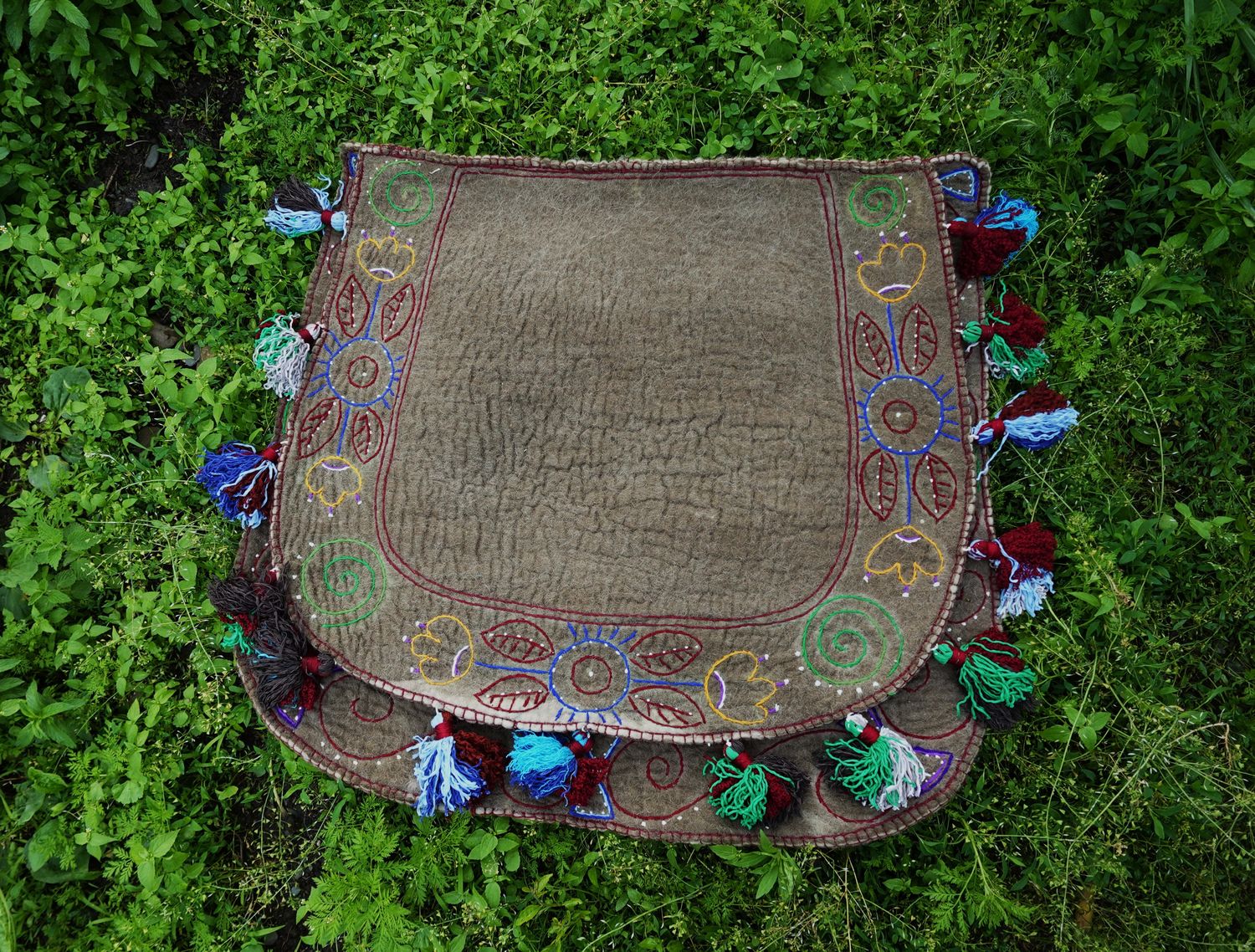
Red fringe felt
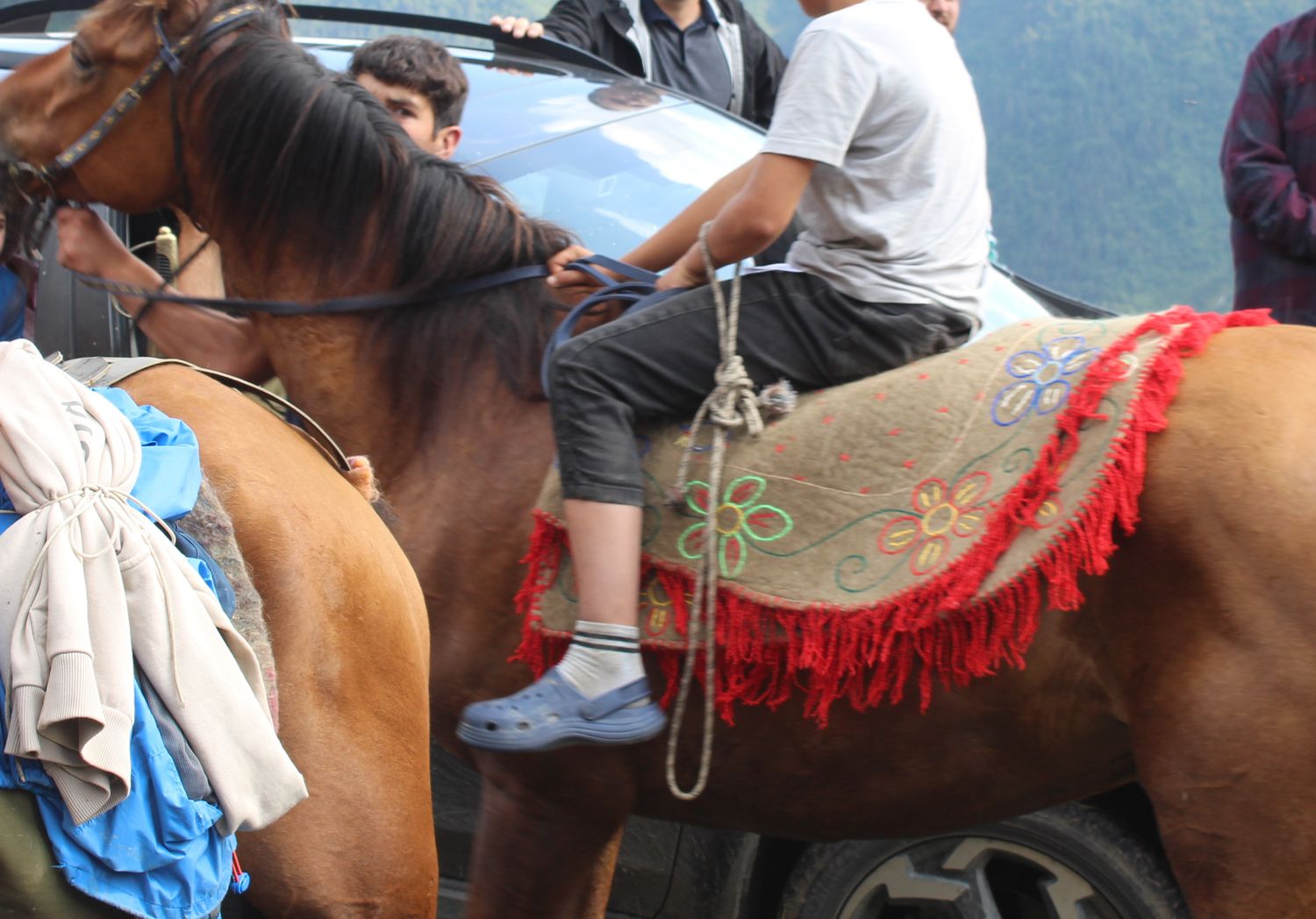
Felt with floral embroidery and a heavy red wool fringe, in the classic festival style of the mountains.
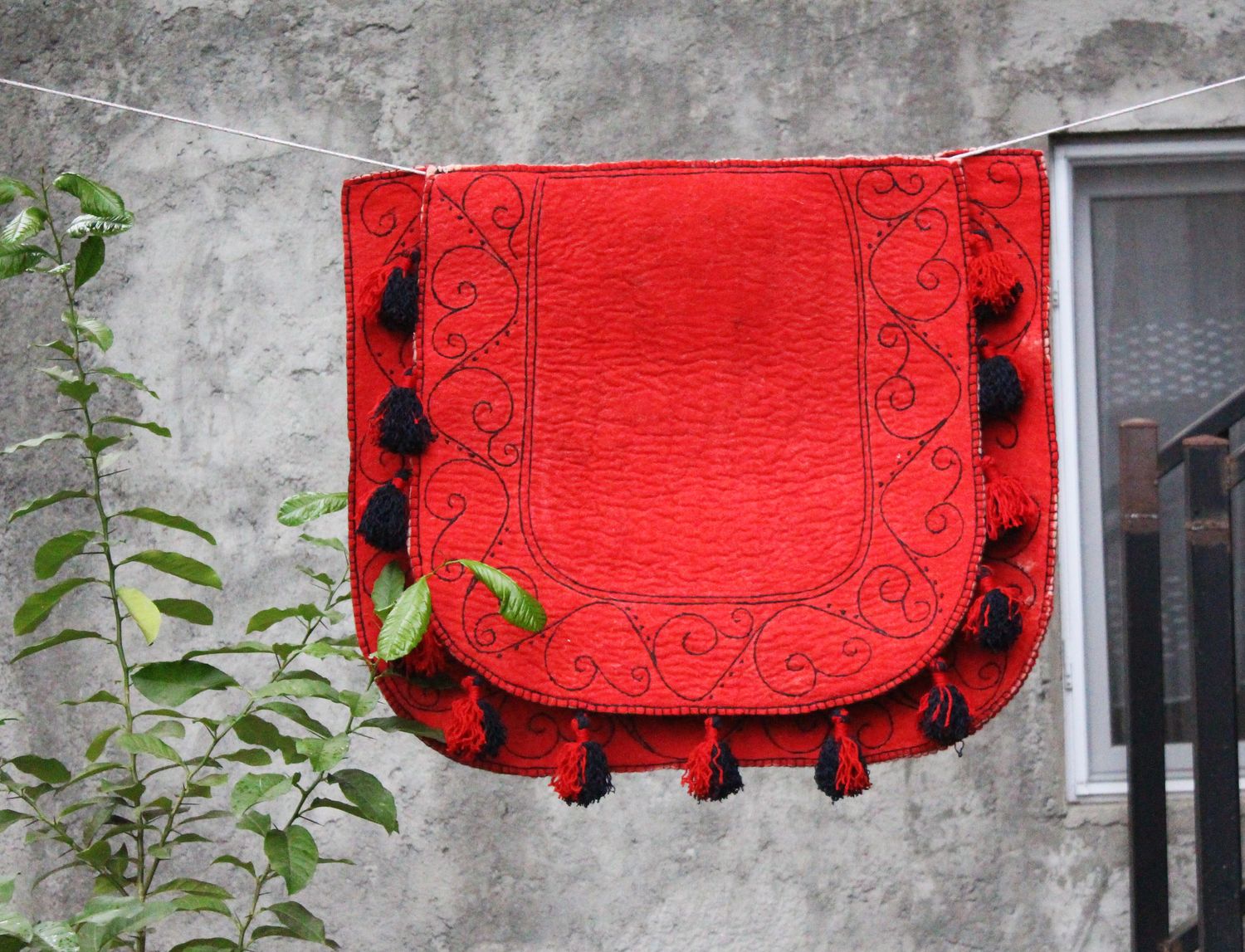
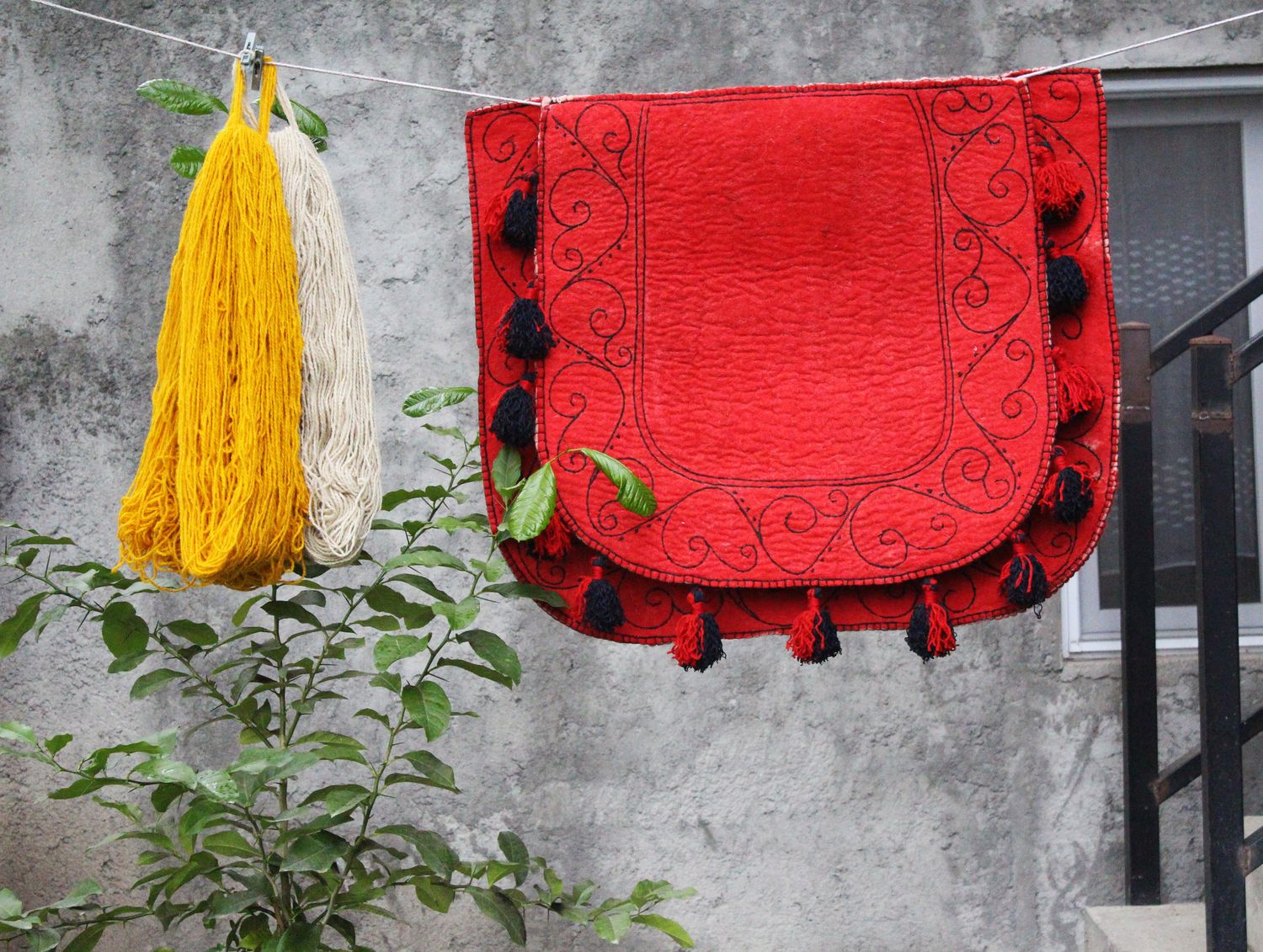
The majlis collectible
Heritage as wall art
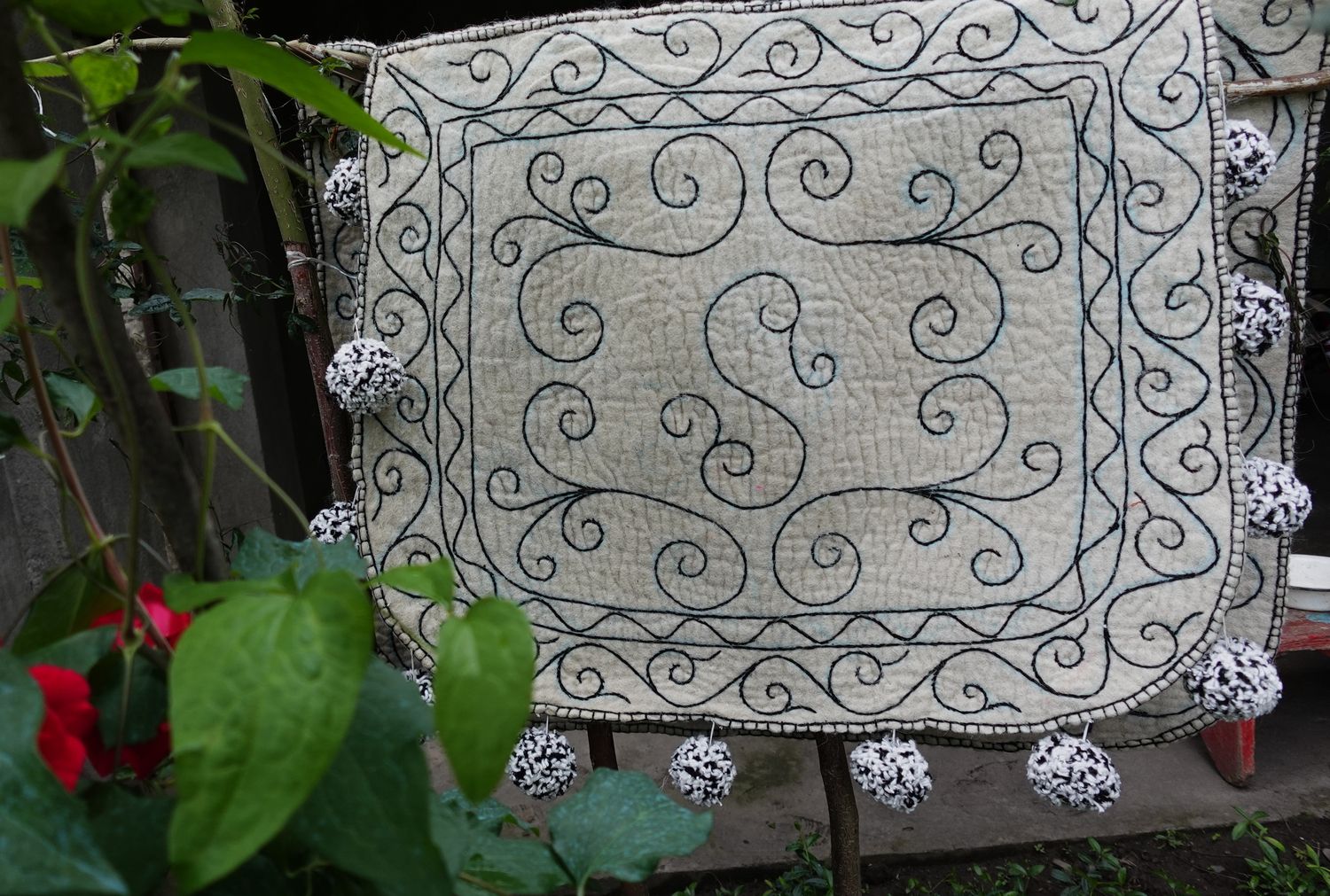
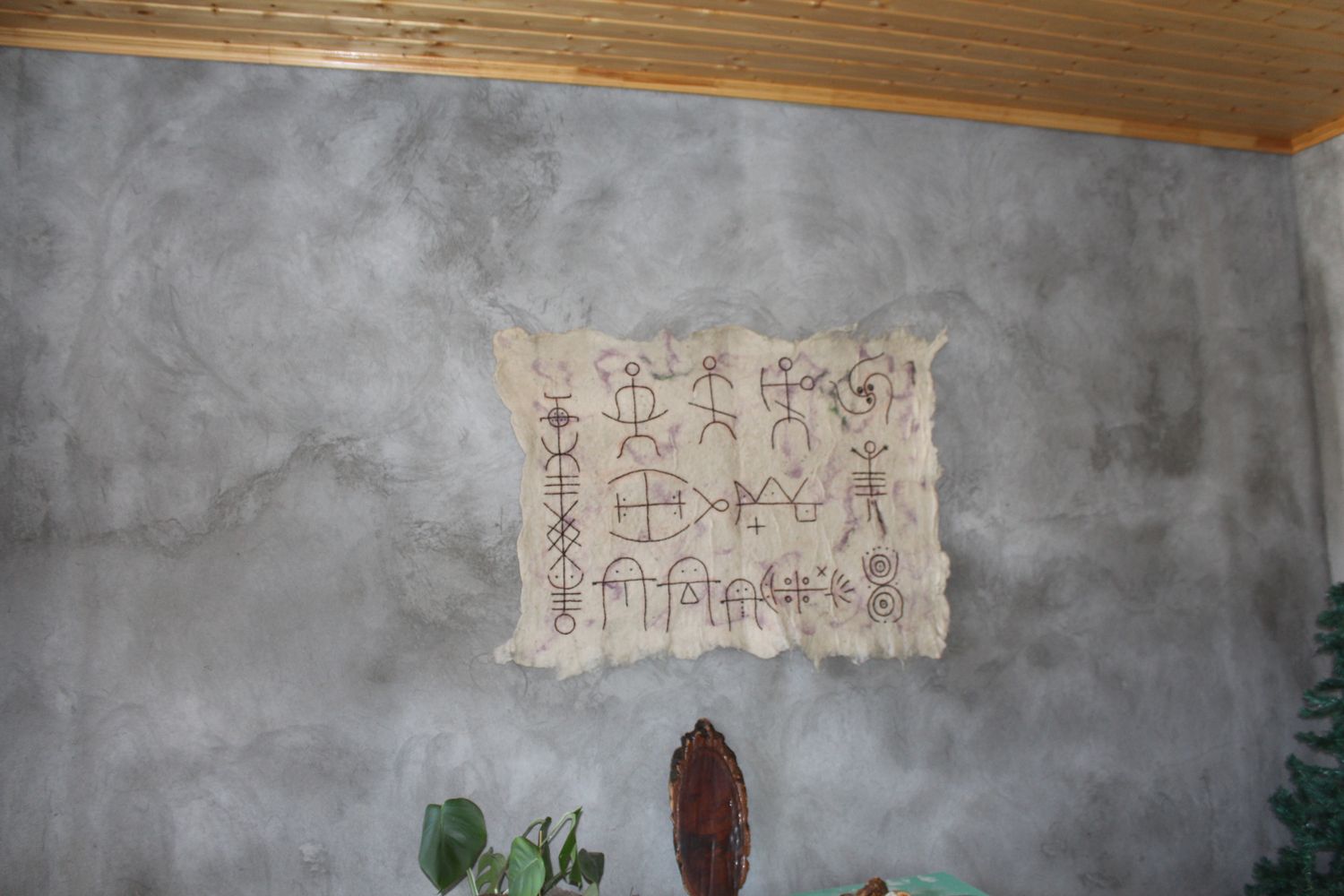
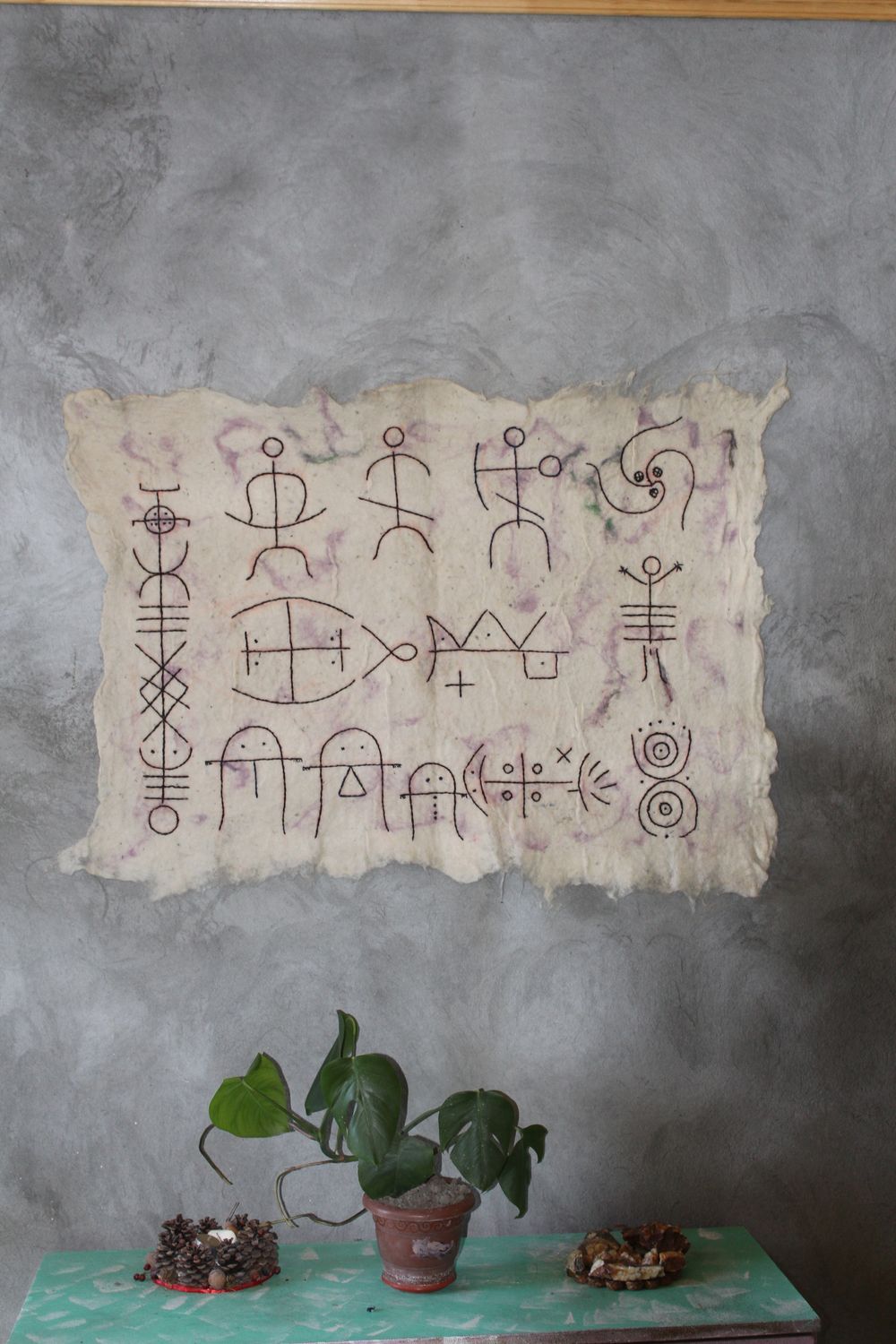
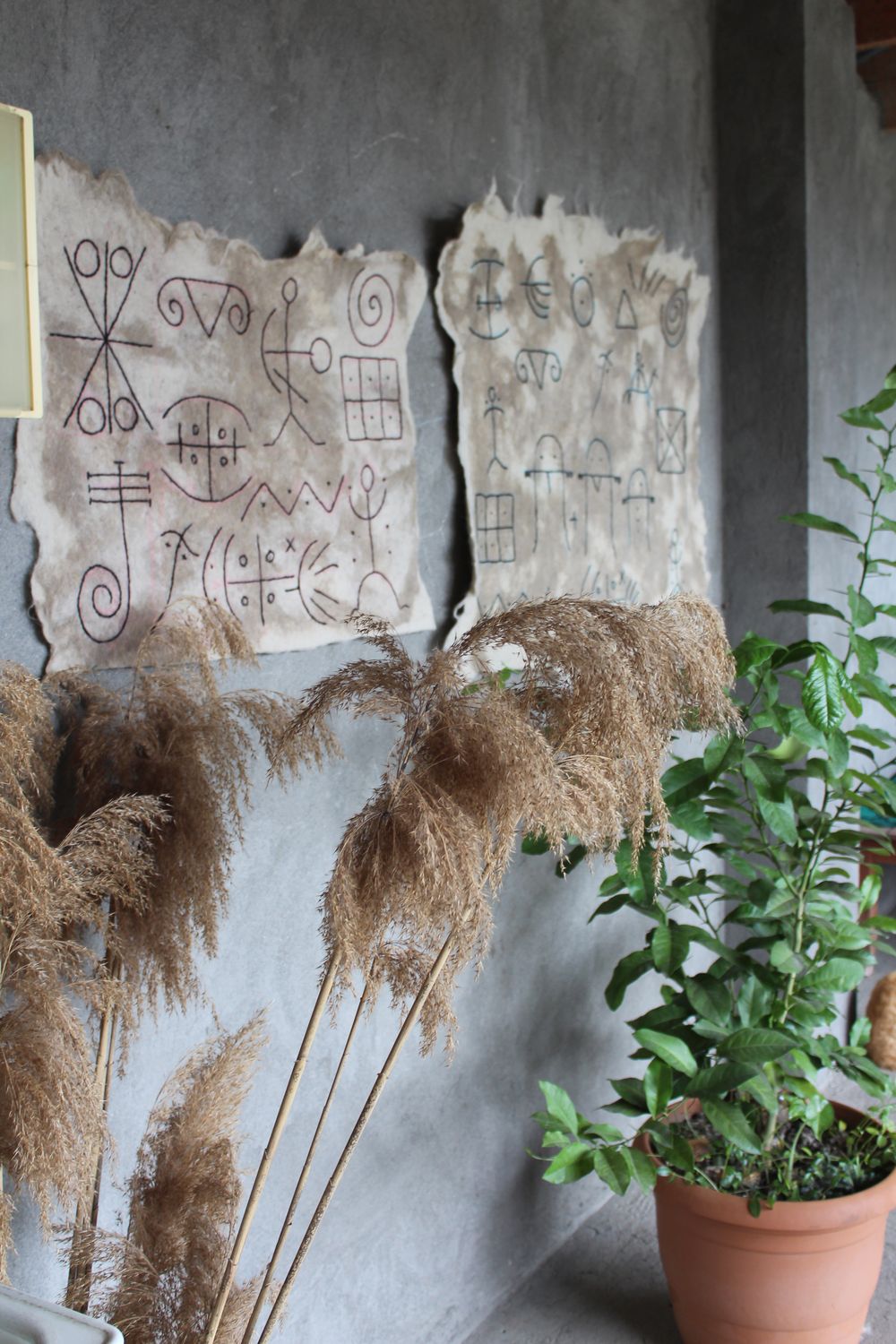
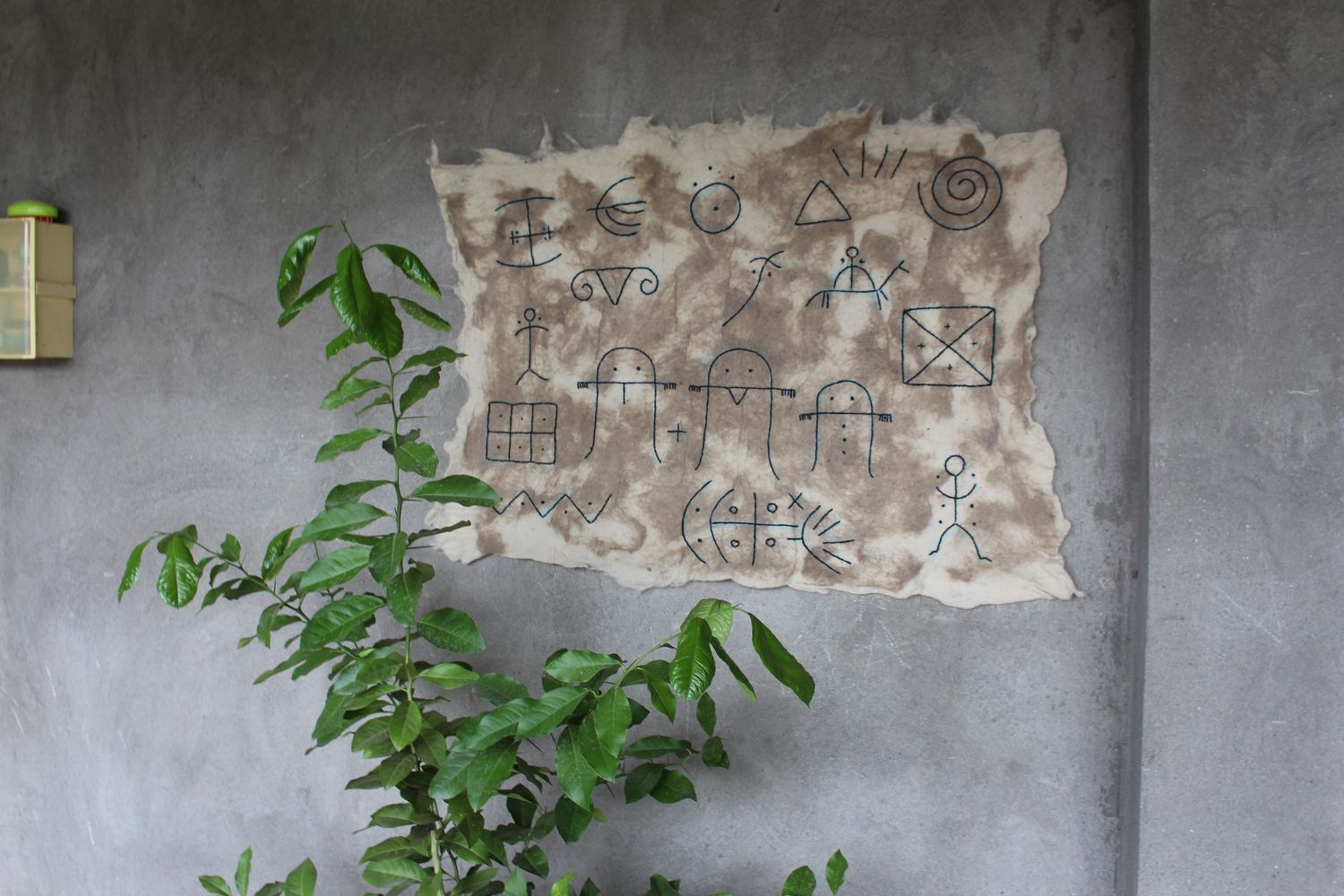
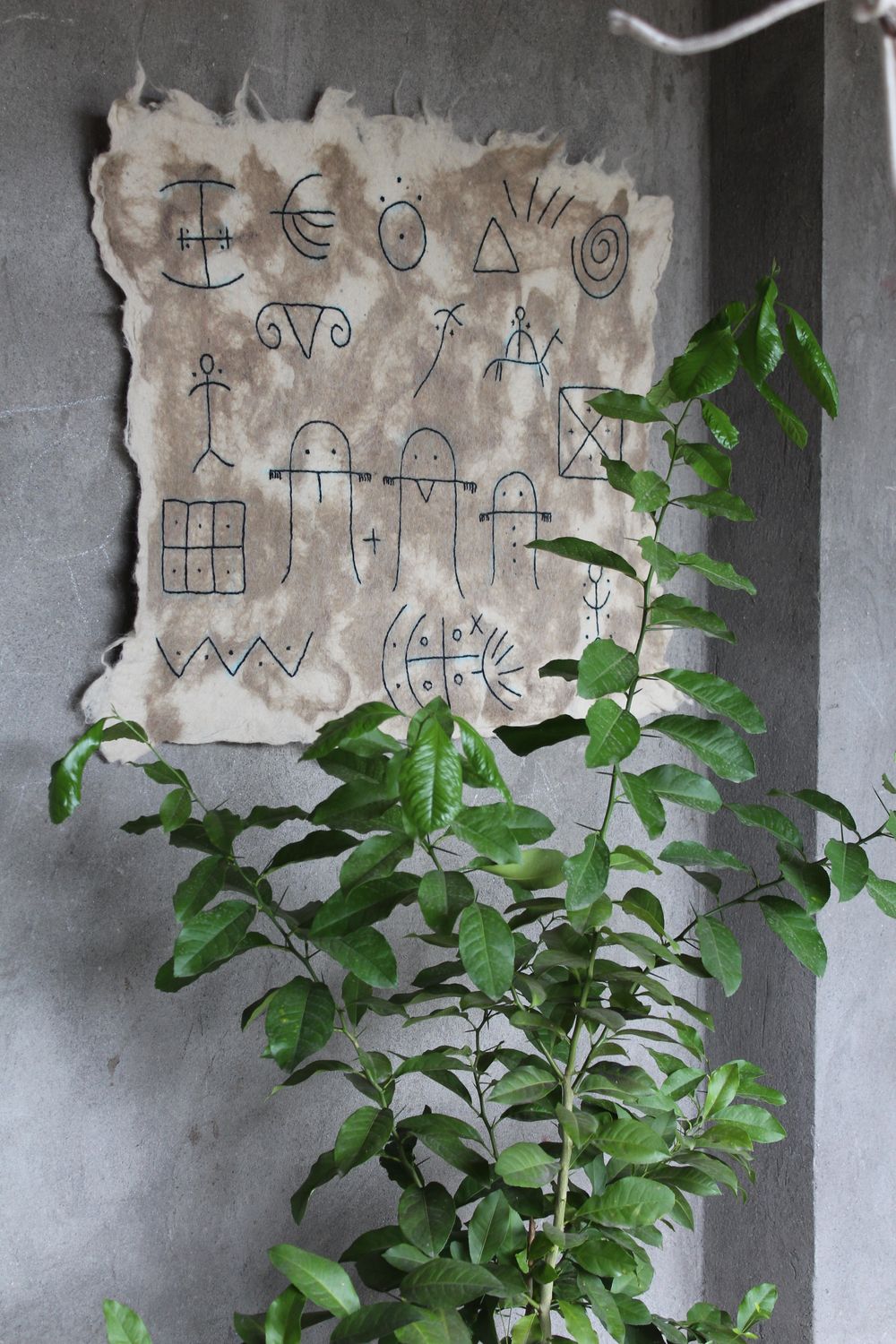
Beyond the stable, these pieces make a statement. A woven Shabrak hung flat reads as a tapestry. A felt panel with hand-drawn Tushetian pictograms reads as quiet, ancient art. Draped over a sofa, a bench or a chest, either one brings the warmth of the Caucasus into a private collection or a traditional majlis.
Below are felt pictogram panels as they hang on a plain wall.
How it is made
Slowly, from natural materials
Wool
Brought down from Tusheti, then washed, cleaned, dried and carded by hand.
Dye
Walnut bark, soot, onion skin, peach leaf, saffron flower and other plants. Natural colour that holds.
Felt or weave
Layers of wool felted by hand with boiling water and soap, or woven on the loom. One felted piece takes about three hours of felting alone.
Embroider
Once dry, the piece is shaped and embroidered by hand. The design is decided as the work goes.
In its home
Still worn in the mountains
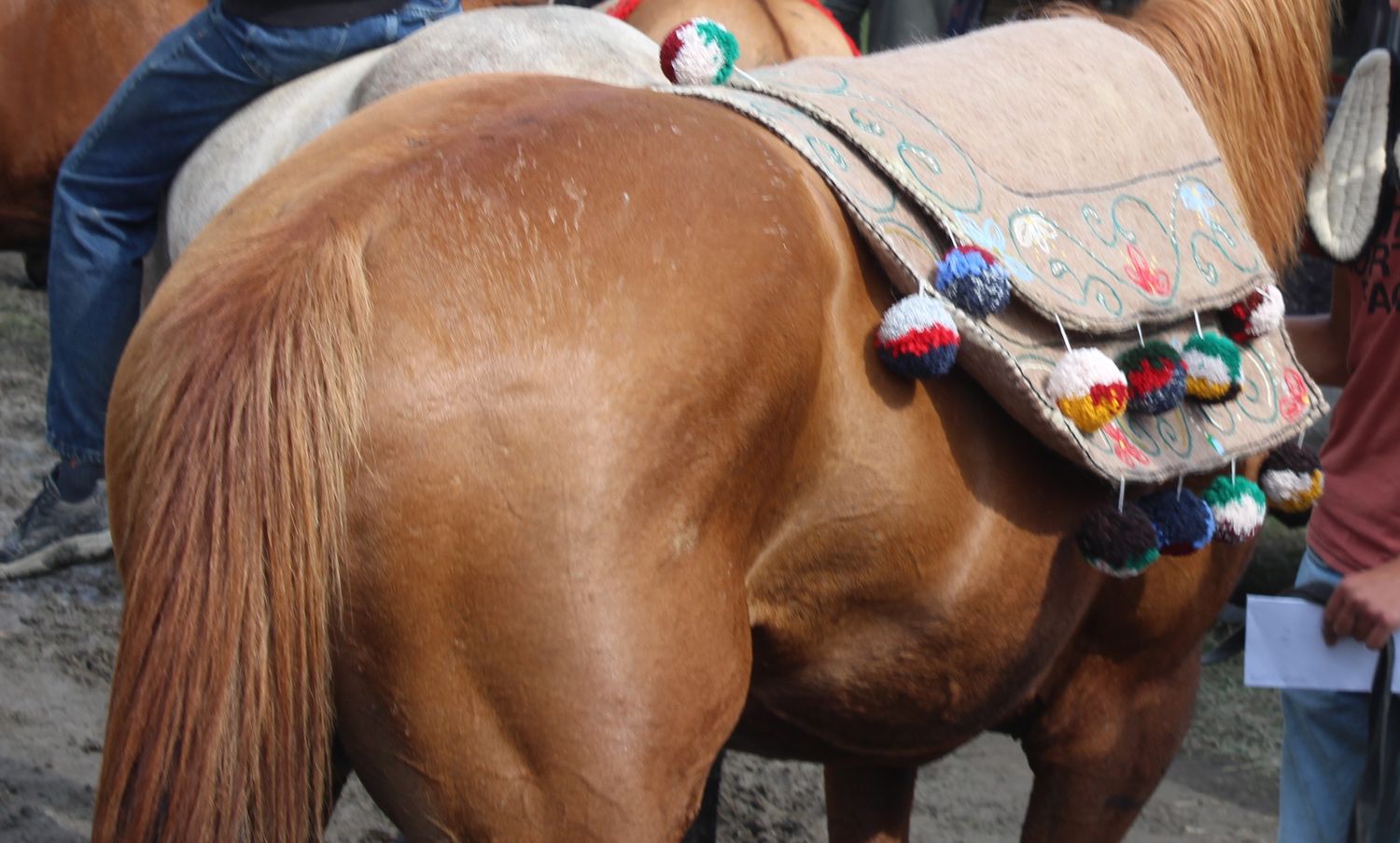
The Shabrak began as working horse gear and is still worn on horseback at gatherings in Georgia's highlands. This is the tradition you would be bringing home.
Made for your space
Commissioned to your request
Colour and pattern
Tell us the palette of your room and we brief the artisan. Natural plant dyes give a rich range of reds, greens, golds and neutrals.
Size and finish
From wall pieces to full drapes, with fringe, tassels or pompoms, and a mounted or framed finish for display.
Provenance
Each piece comes with the story of its maker and its mountain origin, which is much of what makes it collectible.
Tell us
Send a message with the room, the colours and the size you have in mind.
We reply
You receive photographs of similar pieces and a quote.
It is made
Irma makes your piece by hand. Timing is confirmed when you commission.
It arrives
Shipped to you, with the maker's story. Shipping is charged at cost.
Questions
Good to know
What is a Shabrak?
A traditional saddle pad and horse blanket from the Tusheti region of Georgia, woven or felted by hand and decorated with local ornament.
Is every piece different?
Yes. Irma does not work from a fixed pattern. She decides the embroidery as she works, so no two pieces are the same, even in the same colours.
Can I choose colours and size?
Yes. Custom designs are welcome. Tell us what you have in mind and we will brief the maker.
Are the dyes natural?
Yes. The wool is naturally white and is dyed with plants such as walnut bark, onion skin, peach leaf and saffron flower.
How much does a piece cost?
Each piece is quoted individually, according to the type, size and amount of handwork. Send an enquiry and we will reply with a price.
Where does the profit go?
A share of every sale supports the Jughaani animal sanctuary in Georgia.
By private enquiry
From the Caucasus Mountains to your majlis
Send us a message with your preferences and we will reply with photographs and a quote.
Enquire on WhatsApp +995 511 16 49 71